Canon EOS R8 Review: That Won’t Break Your Budget
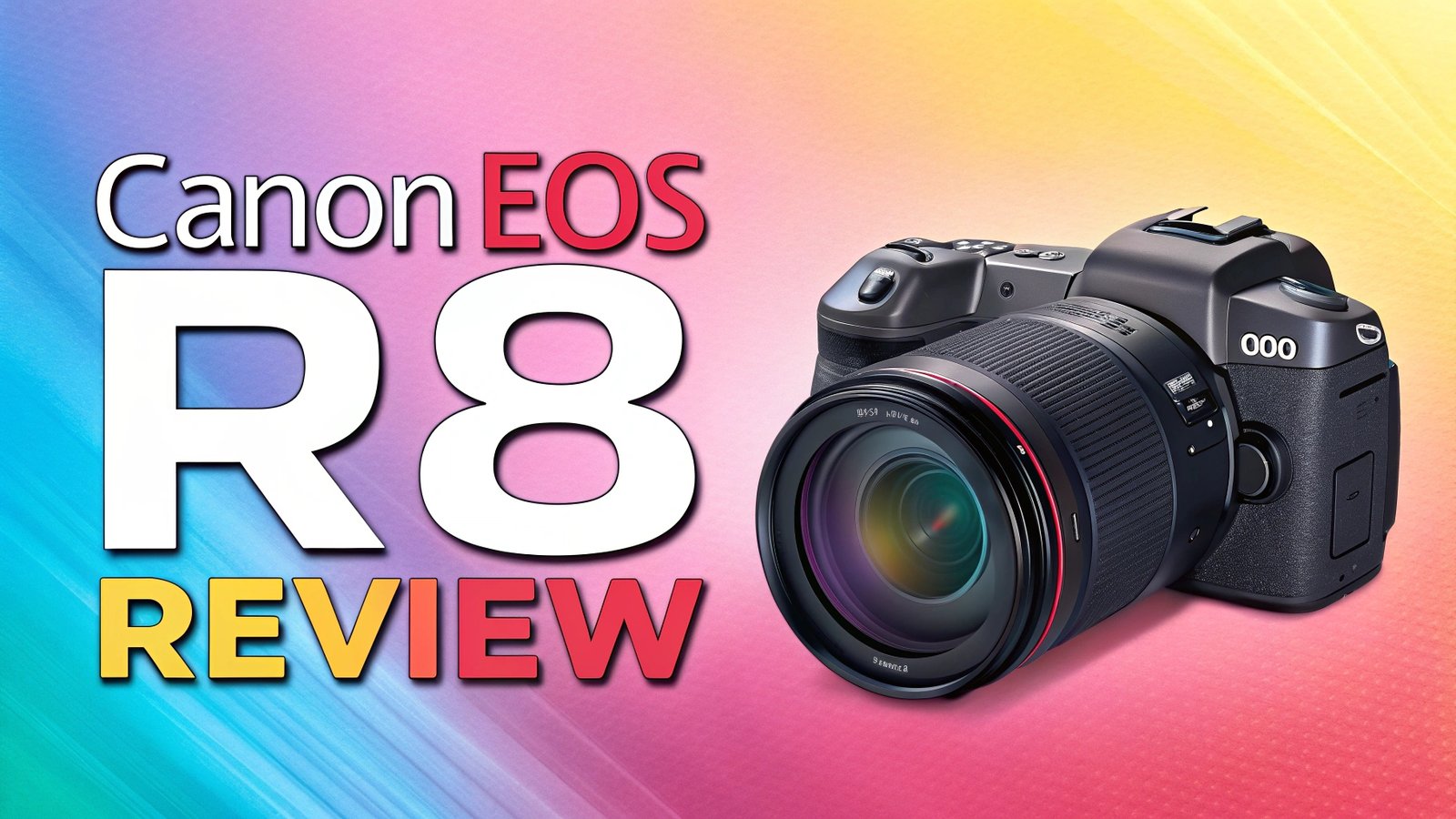
The photography game changed forever when Canon launched the EOS R8 mirrorless camera.
This compact powerhouse delivers professional image quality at a price that makes full frame photography accessible to everyone.
Whether you’re stepping up from crop sensor cameras or seeking a lightweight alternative to bulky DSLRs, the Canon R8 promises to transform your creative vision into stunning reality.

Key Takeaways
- Outstanding Image Quality: The R8 shares the same 24.2MP full frame sensor as the R6 Mark II, delivering exceptional detail and dynamic range that rivals cameras costing twice as much.
- Lightning Fast Autofocus: Canon’s Dual Pixel CMOS AF II system provides 1,053 autofocus points with subject detection for people, animals, and vehicles, ensuring sharp focus every single time.
- Professional Video Features: Record 4K 60p video with 6K oversampling for incredibly detailed footage, plus Full HD slow motion at up to 180fps for creative effects.
- Compact and Lightweight Design: At just 461 grams, this camera travels anywhere and shoots comfortably all day without fatigue or bulk.
- Excellent Value Proposition: Starting at $1,499, the R8 delivers premium full frame performance at an entry level price point that democratizes professional photography.
- RF Mount Compatibility: Access Canon’s entire RF lens ecosystem including affordable options and professional glass for unlimited creative possibilities.

Canon EOS R8 Overview and First Impressions
The Canon EOS R8 represents a significant milestone in affordable full frame photography. Canon designed this camera to bridge the gap between entry level and professional systems. The moment you pick up the R8, you notice its surprisingly compact size and solid build quality.
The camera feels premium despite its lightweight construction. Canon used high quality materials throughout, creating a body that inspires confidence during extended shooting sessions. The grip provides excellent handling, even when paired with larger RF lenses. The button layout follows Canon’s traditional design philosophy, making the transition seamless for existing Canon users.
What truly impresses about the R8 is its feature set. Canon didn’t compromise on essential capabilities to achieve the lower price point. Instead, they made strategic decisions about which premium features to include. The vari angle touchscreen rotates fully, perfect for content creators and social media photographers. The electronic viewfinder delivers sharp, clear images with minimal lag.
The camera boots up quickly and responds instantly to user inputs. Canon’s menu system remains intuitive and well organized, allowing photographers to customize controls extensively. The RF mount opens up access to Canon’s newest and most advanced lenses, ensuring excellent optical performance across the entire system.
Build Quality and Design Philosophy
Canon approached the R8’s design with portability as a primary goal. The camera measures 132.5 x 85.8 x 70.0mm, making it one of the most compact full frame cameras available. Despite its small size, Canon maintained excellent ergonomics throughout the design process.
The magnesium alloy body provides durability while keeping weight minimal. Canon sealed critical areas against dust and moisture, though the R8 lacks the comprehensive weather sealing found in higher end models. This compromise helps achieve the attractive price point while maintaining reasonable protection for typical shooting conditions.
Button placement follows Canon’s established design language. The main command dial falls naturally under your index finger, while the rear dial positions perfectly for thumb operation. Canon included customizable function buttons, allowing photographers to tailor controls to their shooting style.
The electronic viewfinder delivers 2.36 million dot resolution with good brightness and color accuracy. Photographers transitioning from optical viewfinders will appreciate the natural viewing experience. The 3.0 inch vari angle touchscreen provides excellent image review capabilities and simplifies menu navigation.
Canon’s attention to detail shows in small touches throughout the camera. The battery door opens smoothly and locks securely. The memory card slot accepts fast UHS II cards for optimal performance during burst shooting and 4K video recording.
Top 3 Alternatives for Canon EOS R8


When considering the Canon R8, three compelling alternatives deserve serious consideration. The Sony A7 III offers excellent image quality with superior battery life and dual card slots. Sony’s autofocus system performs exceptionally well for both stills and video. However, the A7 III costs more and lacks some of the R8’s newer features like 4K 60p recording.
The Nikon Z5 provides outstanding value with in body image stabilization and robust build quality. Nikon’s color science produces beautiful skin tones straight from camera. The Z5 includes dual memory card slots for backup security. However, it offers slower burst rates and less advanced video features compared to the R8.
The Canon R6 Mark II represents the logical step up within Canon’s system. It adds in body stabilization, faster burst rates, and superior battery life. The R6 Mark II includes dual card slots and more robust weather sealing. However, it costs significantly more than the R8 while sharing the same sensor and image quality.
Image Quality Performance Analysis
The R8’s image quality performance rivals cameras costing twice as much. Canon’s 24.2MP full frame sensor captures exceptional detail across the entire ISO range. Dynamic range performance allows photographers to recover significant detail from shadows and highlights during post processing.
Low light performance stands out as a particular strength. The camera produces clean, usable images at ISO 6400 with acceptable noise levels extending to ISO 12800. Color accuracy remains excellent even at higher sensitivities. Canon’s color science delivers pleasing skin tones and natural color rendition across all lighting conditions.
The camera handles high contrast situations well. 14 stops of dynamic range provide excellent latitude for exposure corrections. Highlight recovery works particularly well, allowing photographers to correct overexposed skies and bright reflections. Shadow recovery reveals clean detail without excessive color shifts or noise.
JPEG processing produces excellent results straight from camera. Canon’s Picture Styles offer creative options while maintaining natural color balance. The Standard picture style works well for most situations, while Portrait and Landscape modes optimize settings for specific subjects.
RAW file quality provides extensive post processing flexibility. The files respond well to exposure adjustments and color grading. Canon’s DPP software extracts maximum quality from R8 files, though third party options like Lightroom and Capture One also produce excellent results.
Autofocus System and Performance
Canon equipped the R8 with their advanced Dual Pixel CMOS AF II system. This technology provides 1,053 autofocus points covering approximately 100% of the image area. The system tracks subjects accurately across the entire frame, maintaining focus even during rapid movement.
Subject detection works exceptionally well for people, animals, and vehicles. The camera automatically identifies eyes, faces, and bodies with impressive accuracy. Animal detection recognizes cats, dogs, and birds reliably. Vehicle detection handles cars, motorcycles, and aircraft effectively during motorsports photography.
Single point autofocus provides precise control for critical focusing situations. The system locks onto subjects quickly and maintains tracking even in challenging lighting conditions. Zone and flexible zone modes offer balanced performance between precision and coverage area.
Continuous autofocus excels during burst shooting sequences. The camera maintains sharp focus while shooting at 6 frames per second with mechanical shutter or 40 fps with electronic shutter. AF tracking sensitivity adjusts how quickly the system switches to new subjects, providing customization for different shooting scenarios.
Low light autofocus performs admirably down to -6.5 EV with appropriate lenses. The system focuses reliably in dim conditions that challenge many cameras. AF assist beam helps in extremely dark situations when needed.
Video Recording Capabilities
The Canon R8 delivers impressive video performance that rivals dedicated video cameras. 4K UHD recording at up to 60 frames per second provides smooth motion and exceptional detail. Canon uses 6K oversampling to create superior 4K footage with minimal aliasing or moiré effects.
Full HD recording extends up to 180 frames per second for dramatic slow motion effects. The high frame rates open creative possibilities for capturing fast action and creating compelling visual stories. 2 hour continuous recording surpasses the typical 30 minute limitation found on many cameras.
10 bit internal recording captures expanded color information for professional post production workflows. Canon Log recording provides maximum flexibility during color grading and exposure correction. Dual Pixel CMOS AF operates smoothly during video recording, maintaining sharp focus without hunting or pulsing.
In camera image stabilization isn’t available, but Canon’s IS lenses provide effective stabilization for handheld shooting. The vari angle screen simplifies framing from various angles and positions. Clean HDMI output supports external recorders for extended recording capabilities.
Audio recording includes stereo internal microphones with wind noise reduction. External microphone support via 3.5mm jack accommodates professional audio equipment. Headphone monitoring helps ensure optimal audio levels during recording sessions.
Battery Life and Power Management
The Canon R8 uses the LP E17 battery, the same unit found in Canon’s crop sensor cameras. This smaller battery provides approximately 370 shots per charge under CIPA testing conditions. Real world usage varies significantly based on shooting style and feature usage.
Power saving modes extend battery life during extended shooting sessions. The camera enters sleep mode quickly when inactive, preserving charge for actual shooting. USB C charging provides convenient power options using portable battery packs or wall adapters.
Battery life during video recording lasts approximately 1.5 to 2 hours depending on recording settings and environmental conditions. 4K 60p recording consumes more power than lower resolution modes. External power supplies extend recording capability for long form content creation.
Power consumption increases significantly when using the electronic viewfinder continuously. The rear LCD consumes less power when possible. Wi Fi connectivity and image transfer also impact battery longevity during active use.
Professional photographers typically carry multiple spare batteries for extended shooting sessions. The relatively low battery cost makes building a power system affordable compared to premium battery solutions.
Lens Compatibility and RF Mount System
The Canon R8 features the RF mount, providing access to Canon’s most advanced lens technology. RF lenses offer superior optical performance compared to older EF designs. The 12mm flange distance allows for compact lens designs while maintaining excellent image quality.
Native RF lenses include affordable options like the RF 24 50mm f/4.5 6.3 IS STM kit lens and premium choices like the RF 70 200mm f/2.8L IS USM. Canon continues expanding the RF lineup with specialized lenses for various photography genres.
EF lens compatibility exists through Canon’s EF RF adapter. The adapter maintains full electronic communication and autofocus performance. Image stabilization works correctly with EF IS lenses through the adapter. However, native RF lenses typically offer superior performance and smaller size.
Third party lens support includes options from Tamron, Sigma, and other manufacturers. These lenses often provide excellent value while maintaining compatibility with Canon’s autofocus and exposure systems. Manual focus lenses also work well with the R8’s focus peaking and magnification features.
The RF mount communication enables advanced features like lens based image stabilization coordination and precise aperture control during video recording. Lens corrections apply automatically for vignetting, distortion, and chromatic aberration when using compatible RF lenses.
Storage Options and Connectivity Features
The Canon R8 includes a single SD card slot supporting UHS II speeds for optimal performance. Fast memory cards ensure smooth 4K video recording and rapid burst shooting capabilities. The single slot design represents a compromise to achieve the camera’s affordable price point.
Wi Fi connectivity enables wireless image transfer to smartphones and computers. Canon’s Camera Connect app provides remote shooting control and image sharing capabilities. The wireless connection works reliably within typical indoor and outdoor ranges.
Bluetooth connectivity maintains a constant low power connection for automatic image transfer and GPS data synchronization. The connection preserves battery life while keeping devices synchronized. USB C connectivity provides fast wired image transfer and in camera charging capabilities.
Cloud storage integration works through Canon’s image.canon platform when connected to compatible services. This feature simplifies backup and sharing workflows for professional and amateur photographers. FTP transfer capabilities support professional workflows requiring immediate image delivery.
The camera supports USB tethering for studio photography applications. Compatible software includes Canon’s EOS Utility and third party solutions like Capture One. HDMI output delivers clean video signals for external monitors and recording devices.
Real World Performance Testing
Extended field testing reveals the R8’s practical strengths and limitations. Startup time measures approximately 1 second from power on to first shot capability. The camera responds immediately to control inputs without noticeable lag or delay.
Burst shooting performance delivers consistent 6 frames per second with mechanical shutter across extended sequences. The electronic shutter reaches up to 40 fps but introduces rolling shutter effects with fast moving subjects. Buffer capacity handles approximately 51 RAW files before slowing down.
Heat management performs well during typical photography sessions. 4K 60p video recording generates noticeable heat during extended sessions but rarely triggers thermal shutdowns under normal conditions. Ambient temperature affects thermal performance, with hot weather reducing continuous recording capabilities.
Weather resistance proves adequate for light rain and dusty conditions. However, the camera lacks comprehensive sealing found in weather resistant bodies. Careful handling in challenging conditions prevents moisture ingress and dust accumulation.
Long term reliability appears excellent based on early user reports and professional testing. Canon’s manufacturing quality ensures consistent performance across production units. Firmware updates continue improving performance and adding new features post launch.
Pricing and Value Analysis
The Canon R8 launched at $1,499 for the body only, positioning it as the most affordable full frame camera in Canon’s mirrorless lineup. This pricing strategy makes full frame photography accessible to enthusiasts upgrading from crop sensor systems.
Kit pricing with the RF 24 50mm f/4.5 6.3 IS STM lens starts around $1,799, providing excellent value for complete system entry. The kit lens performs well for general photography while keeping overall system cost reasonable.
Competitive pricing positions the R8 favorably against Sony and Nikon alternatives. The camera often sells for less than competing full frame bodies while offering comparable or superior features. Promotional pricing during sales events makes the system even more attractive.
Long term value appears strong given Canon’s commitment to the RF mount system. Lens ecosystem growth ensures expanding creative possibilities over time. Firmware updates continue adding features and improving performance at no additional cost.
Professional applications justify the investment for working photographers needing full frame image quality in a portable package. Content creation capabilities support modern social media and video production requirements effectively.
Frequently Asked Questions
Is the Canon EOS R8 good for beginners?
Yes, the Canon R8 offers excellent beginner friendly features including automatic modes, guided menus, and reliable autofocus. The camera grows with user skills while providing professional image quality from day one.
How does the R8 compare to the R6 Mark II?
The R8 shares the same sensor and image processor as the R6 Mark II but lacks in body stabilization, dual card slots, and has reduced battery life. The R6 Mark II offers more professional features at a higher price point.
Can the Canon R8 shoot in low light conditions?
Yes, the R8 performs exceptionally well in low light with usable images up to ISO 12800. The full frame sensor and advanced image processing deliver clean results in challenging lighting conditions.
Does the Canon R8 have image stabilization?
The R8 doesn’t include in body image stabilization, but it works with Canon’s IS lenses for effective stabilization. Many RF lenses include optical stabilization that provides excellent results.
What memory cards work best with the Canon R8?
The R8 works with SD, SDHC, and SDXC cards. UHS II cards provide optimal performance for 4K video recording and burst photography. Fast cards prevent bottlenecks during intensive shooting.
Is the Canon R8 worth buying in 2026?
Absolutely. The R8 continues offering exceptional value for full frame photography. Recent firmware updates have improved performance, and the growing RF lens ecosystem provides expanding creative possibilities.