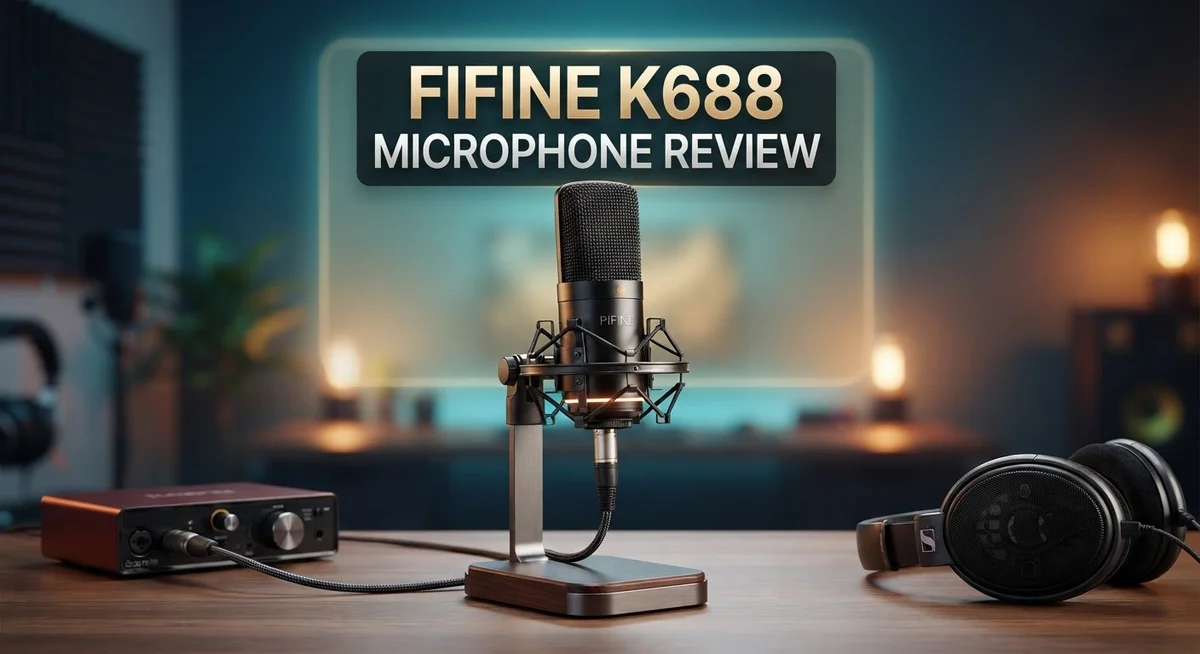
FIFINE K688 Microphone Review: Worth the Price Tag?
Looking for a microphone that works for gaming, streaming, and content creation? The Fifine K688 might catch your eye.
This dynamic microphone offers something special. It gives you dual connectivity with both USB-C and XLR options.
You get flexibility to switch between simple plug-and-play setups or professional audio interfaces. The metal construction feels solid in your hands.
In a Nutshell
- Solid metal build makes this mic feel sturdy on your desk. It can handle daily streaming sessions without wobbling or wearing down fast.
- The mic uses a built-in chip to keep audio steady. This helps voices sound clear even during long recording sessions.
- A mute button and volume dial sit right on the mic body. You can silence yourself instantly or adjust monitoring levels without touching software.
- Gain knobs let you tweak input levels on the spot. This comes in handy when switching between quiet rooms and louder gaming setups.
- Some buyers report weak bass pickup, so deep voices may sound thinner than expected. Reviews stay mixed on this point.
- Against rivals like the Behringer XM8500 and Zoom ZDM-1, the K688 packs more onboard controls. This makes it a solid pick for streamers who want quick adjustments without extra gear.
Key Features and Specifications
The Fifine K688 packs several standout features that make it worth considering. This dynamic microphone combines two connection types in one device. You can use USB-C for direct computer connection or XLR for professional audio interfaces.
The microphone body uses solid metal construction. This build quality feels premium and durable on your desk. Inside, a built-in chip handles audio processing. This chip keeps your sound consistent during recording sessions.
Control options sit right on the microphone body. A mute button lets you quickly silence audio without software adjustments. The monitoring volume control gives you real-time feedback through headphones. You also get gain knobs to adjust input levels on the spot. These hands-on controls mean less time spent in menus.
The detachable USB-C cable adds convenience. You can swap cables if needed or replace worn connections. This design choice extends the microphone’s lifespan significantly.
Audio quality stands out as a major strength. The K688 delivers clear, crisp sound that cuts through background noise. Your voice comes through clean and professional during streams or recordings. Gaming sessions benefit from this clarity too.
However, the frequency response shows some limitations. The microphone struggles to capture deep low-end frequencies effectively. If you have a deep voice, your tone may sound thinner than expected. Bass heavy content also gets reduced in the final recording.
User opinions on this microphone vary quite a bit. Some creators love the flexibility and ease of use. Others find the low-end weakness disappointing for their needs. This polarization suggests the K688 works great for certain use cases but not all.
The microphone shines for gaming, streaming, and general content creation. Podcasters recording voice-focused content get excellent results. The dual connectivity means you choose your workflow. Whether you want simple plug-and-play or professional setup, the K688 adapts to your situation. The onboard controls give you more options than many competitors in this category.

- [Clean Sound Quality] Featured with durability and adaptability, the metal-build podcast microphone, with SPL of 130dB, will not distort the audio from vocal, video or music recording to keep its originality. Quite directional cardioid pattern deals with background noise, like hard drives or computer fans. The microphone for PC delivers detail voice without much additional noise processing. (Arm stand, mic stand and XLR cable are NOT included.)
- [Upgrade XLR Output] XLR microphone reduces circuit noise interference and enhances the sense of audio space. Worked with S/N Ratio higher than 80dB, the dynamic microphone upgrades dynamics and details to makes your vocal easier to resonate. Use the streaming mic with sound card or mixer equipment accessories in your studio to present more natural and high-end audio in recording, vocals.
Last update on 2026-09-21 / Affiliate links / Images from Amazon Product Advertising API Some of the links on this website are affiliate links, which means that at no additional cost to you, I earn a commission if you click through and make a purchase. I only recommend products and services that I believe will add value to my readers. Thank you for your support!
Design and Build Quality
The Fifine K688 feels solid the moment you pick it up. Metal construction gives this microphone a premium feel that stands out from plastic alternatives. The build quality suggests this mic can handle daily use without falling apart.
The microphone body houses all the important controls within arm’s reach. You get a mute button for quick silence when needed. A volume dial lets you monitor your audio in real time. Gain knobs sit on the mic so you can adjust input levels without touching your computer.
The detachable USB-C cable adds practical value to the design. You can swap cables if one gets damaged. This approach beats permanently attached cables that fail and ruin the whole microphone. The cable disconnects cleanly and reconnects just as easily.
A built-in chip keeps your audio stable during recording sessions. This chip handles signal processing right at the source. You get cleaner audio compared to microphones that rely entirely on software processing.
The K688 weighs enough to feel substantial but stays light enough to position wherever you need it. The metal body resists dents and scratches better than plastic frames. The microphone sits stable on any desk without wobbling around.
Compared to competitors like the Behringer XM8500, the K688 packs more onboard controls. The Zoom ZDM-1 offers portability, but the K688 gives you more hands-on adjustment options. The Fifine K669D shares similar build quality but differs in connectivity options.
One design choice worth noting: the microphone prioritizes mid and high frequency capture. This works great for voice work and streaming. However, the limited low end response means deep bass sounds may come through thinner than expected. Some users report weak bass pickup, which affects how deep voices sound.
The overall design philosophy focuses on simplicity and durability. Everything you need sits on the microphone body. No buried menus or confusing software interfaces slow you down. The K688 gets you recording quickly while maintaining build quality that lasts.
Audio Performance and Sound Quality
The Fifine K688 delivers crisp, clear audio that works well for most recording scenarios. The microphone captures voices with impressive clarity, making it a solid choice for streamers, podcasters, and content creators who need reliable sound quality right out of the box.
The microphone’s strength lies in its mid and high frequency capture. This means vocals and spoken words come through sharp and defined. If you record gaming commentary, interviews, or voiceovers, you’ll hear your content shine through without muddiness or distortion.
However, the K688 shows some limitations in the lower frequency range. Deep voices and bass sounds may come across thinner than you’d expect. If you have a naturally low voice or record instruments with heavy bass components, you might notice the audio lacks that full, rich bottom end. This is a trade off many dynamic microphones make to keep their price point accessible.
The built in chip plays a key role in keeping your audio stable. This means fewer dropouts and more consistent recording quality across your sessions. You won’t experience the sudden audio glitches that plague cheaper microphones.
Sound clarity remains one of the K688’s biggest wins. The microphone handles loud sources without breaking up or crackling. During intense gaming sessions or enthusiastic speaking, the audio stays clean and professional sounding.
User feedback on audio performance shows mixed opinions. Some users praise the natural sound signature, while others wish for more bass response. This split reflects the microphone’s specific design focus on mid range clarity rather than a flat, balanced frequency response.
The onboard controls let you shape your sound in real time. The gain knobs give you quick access to input level adjustments without diving into software settings. The monitoring volume control lets you hear yourself during recording, which helps catch audio problems before they ruin your session.
Overall, the K688 performs best for applications where clarity matters most. Gaming, streaming, and spoken word content shine on this microphone. If your work demands heavy bass capture or studio grade frequency response, you may want to explore other options.
Top 3 Alternatives
Audio-Technica AT2020

- BUNDLE INCLUDES: Audio-Technica AT2020 Cardioid Condenser Studio Microphone with Pop Filter for Broadcasting and Recording Microphones Desktop Boom Arm Microphone Stand, TX 100 Black Closed Back Studio Monitor Headphones, Basic Microphone Shock Mount for 48 53mm Microphones, 25 Feet XLR Male to Female Microphone Cable
- DURABLE: With rugged construction for durable performance, the microphone offers a wide dynamic range and handles high SPLs with ease
Last update on 2026-09-18 / Affiliate links / Images from Amazon Product Advertising API Some of the links on this website are affiliate links, which means that at no additional cost to you, I earn a commission if you click through and make a purchase. I only recommend products and services that I believe will add value to my readers. Thank you for your support!
The Audio-Technica AT2020 captures studio-quality sound with its cardioid condenser design. This microphone picks up vocals and instruments with clarity and precision. You get a flat frequency response that works well for podcasts, streaming, and music recording.
The AT2020 needs phantom power to operate, so you’ll require an audio interface or mixer. Many professionals prefer this requirement because it delivers consistent, professional results. The microphone handles high sound pressure levels without distortion.
Rode NT1

- COMPLETE VOCAL SETUP: shock mount, pop filter and XLR cable included, add an interface and record
- THE SOUND OF HIT RECORDS: the legendary NT1 large-diaphragm condenser voicing trusted in studios for two decades

Last update on 2026-09-18 / Affiliate links / Images from Amazon Product Advertising API Some of the links on this website are affiliate links, which means that at no additional cost to you, I earn a commission if you click through and make a purchase. I only recommend products and services that I believe will add value to my readers. Thank you for your support!
The Rode NT1 offers a warm, smooth sound that many content creators love. This cardioid condenser microphone reduces self-noise significantly, making it ideal for quiet recordings. You’ll notice less background hum compared to similar microphones in this category.
Like the AT2020, the NT1 requires phantom power from your audio interface. The microphone includes a shock mount and pop filter in the package. Streamers and podcasters appreciate its reliable performance during long recording sessions.
Blue Yeti USB

- Custom three-capsule array: This professional USB mic produces clear, powerful, broadcast-quality sound for YouTube videos, Twitch game streaming, podcasting, Zoom meetings, music recording and more
- Blue VO!CE software: Elevate your streamings and recordings with clear broadcast vocal sound and entertain your audience with enhanced effects, advanced modulation and HD audio samples
Last update on 2026-09-18 / Affiliate links / Images from Amazon Product Advertising API Some of the links on this website are affiliate links, which means that at no additional cost to you, I earn a commission if you click through and make a purchase. I only recommend products and services that I believe will add value to my readers. Thank you for your support!
The Blue Yeti USB connects directly to your computer without needing an audio interface. This plug-and-play convenience makes it popular for beginners and casual streamers. The microphone features four pickup patterns: cardioid, omnidirectional, bidirectional, and stereo.
You control gain and mute functions with physical buttons on the microphone body. The Blue Yeti USB delivers solid sound quality for video calls and streaming. Its larger size provides stability on your desk, though it takes up more space than smaller alternatives.
Each option serves different needs. Choose based on your setup, budget, and recording environment.
Connectivity and Ease of Setup
Setting up the Fifine K688 takes just minutes, even if you’ve never used a professional microphone before. The plug-and-play functionality means you can connect it and start recording right away without hunting for drivers or wrestling with complex software.
The dual connectivity option gives you real flexibility. You can plug the detachable USB-C cable directly into your computer for instant recognition, or use the XLR output if you prefer connecting to an audio interface or mixer. This two-way approach works great whether you’re streaming from a laptop or recording in a full studio setup.
The microphone’s onboard controls sit exactly where you need them. You get a gain knob to adjust input levels, a mute button for quick silence, and a monitoring volume control so you can hear yourself without delay. All these buttons and knobs live on the microphone body itself, which means no fumbling through menus or software settings.
The metal construction adds another practical benefit. The solid build keeps everything stable and durable, so your controls stay responsive after months of regular use. The microphone doesn’t feel flimsy or cheap, which matters when you’re adjusting levels during live streams or recording sessions.
Cable management stays simple thanks to the detachable design. You can swap cables if needed or pack the microphone for travel without worrying about a permanently attached cord getting damaged. The USB-C connection itself charges quickly and handles data transfer without lag.
The built-in chip handles all the processing quietly in the background. You don’t need to think about it or configure anything special. The microphone just works once you plug it in and adjust your gain levels.
New users appreciate how straightforward everything feels. The learning curve stays flat because most features sit right on the device itself. You won’t spend hours reading manuals or troubleshooting connection issues. The K688 respects your time and gets you recording fast.
Controls and User Interface
The Fifine K688 puts all its controls right where you need them. You won’t hunt around the microphone body searching for buttons or knobs. Everything sits within easy reach during your recording session.
The mute button gives you instant control over when audio flows. Press it once and your stream stops capturing sound. This proves useful when you need a quick break without stopping your entire recording setup.
The monitoring volume control lets you hear yourself in real time. You adjust how loud your own voice sounds in your headphones. This feature helps you catch mistakes before they make it into your final recording.
The gain knobs sit prominently on the microphone body. You turn them to match your voice level and recording environment. Higher gain settings work better for quieter voices. Lower settings prevent distortion when you speak loudly or close to the microphone.
The dual connectivity setup means your control options expand. You can use USB-C for direct computer connection or XLR for mixer integration. Each connection type gives you different control possibilities depending on your setup.
The built-in chip handles audio processing without requiring extra software. You don’t need to download drivers or complicated control panels. The microphone works right out of the box on most systems.
Physical buttons and knobs feel responsive under your fingers. They don’t wobble or feel cheap. The metal construction supports these controls without flex or play.
Cable management stays simple thanks to the detachable design. You can swap cables quickly if needed. This flexibility means you adjust your setup without wrestling with permanently attached wires.
The interface design focuses on immediate accessibility. You shouldn’t need to read instructions to find the mute button or volume control. Experienced streamers and beginners alike find the layout intuitive.
The onboard controls eliminate menu diving. You make adjustments without opening software or navigating computer settings. This direct approach saves time during live streams or time sensitive recordings.
Pros and Cons
Pros
- Dual USB-C and XLR connectivity gives you flexibility for different setups
- Metal construction feels solid and built to last through regular use
- Plug-and-play setup means you start recording within minutes
- Crisp, clear audio shines in mid and high frequency ranges
- Onboard controls let you adjust gain, monitor volume, and mute instantly
Cons
- Lower frequency response falls short, so bass capture feels limited
- User reviews are mixed, with some people loving it and others finding issues
- Some features don’t deliver the results you might expect from a dynamic microphone
Who Should Buy It
The Fifine K688 works best for creators who want straightforward recording without steep learning curves. If you stream on Twitch or YouTube, this mic delivers the clear, crisp audio your audience expects. Gamers benefit from the responsive mute button and monitoring controls that let you hear yourself instantly.
Content creators who switch between different setups find real value here. The dual USB C and XLR connectivity means you can move from your computer to a mixer without buying new equipment. You’re not locked into one workflow.
Podcasters appreciate the metal construction and solid build quality. Your microphone stays reliable through long recording sessions. The onboard controls let you adjust everything without fumbling through software menus.
New to professional audio? The K688 welcomes beginners. Plug and play functionality gets you recording in minutes. You don’t need to understand complex signal chains or download drivers. Physical buttons and knobs feel responsive, so you learn by doing rather than reading manuals.
However, skip this mic if you need heavy bass capture. The limited low end response means bass guitarists or producers working with deep frequencies should look elsewhere. Musicians recording acoustic instruments that rely on warmth and depth might find the audio lacks body.
People who want maximum flexibility in their setup will love the dual connectivity. Whether you’re recording solo at home or connecting to professional studio gear, the K688 adapts to your needs.
The mixed user reviews tell an important story. Some creators swear by it. Others encounter features that don’t work as expected. This means you should read specific reviews about your exact use case before committing.
Budget conscious streamers and casual podcasters find strong value here. You get premium metal construction and professional connectivity without unnecessary extras. The microphone focuses on doing one job well: capturing clear voice and mid to high frequency audio.
If your workflow demands simplicity, responsive controls, and reliable performance for voice focused content, the K688 fits perfectly into your setup.
Final Verdict
The Fifine K688 earns its place among solid dynamic microphones for everyday creators. Its blend of dual connectivity, metal build, and simple controls makes it a smart pick for anyone starting a streaming or podcasting journey.
Compared to rivals like the Behringer XM8500 or Zoom ZDM-1, the K688 offers more flexibility. You get USB-C and XLR options in one package, something many competitors skip.
The Fifine K669D sits closer in the same product family, but the K688 pulls ahead with its onboard chip and instant plug and play setup. This makes switching between devices fast and painless.
Sound quality stays a strong point for voice work. Streamers, YouTubers, and gamers who focus on clear vocals will notice the difference right away.
That said, this microphone isn’t for everyone. Musicians or podcasters who need deep bass tones might feel let down by the thin low end.
Think about your specific needs before deciding. If you record music, instruments, or anything requiring rich bass, look elsewhere.
But if your content revolves around talking, gaming commentary, or casual streaming, the K688 delivers real value. It handles the basics well and adds convenient features that save time.
Build quality remains a highlight throughout daily use. The metal housing survives drops, bumps, and constant handling without showing wear.
For creators comparing multiple budget friendly options, this microphone stands out through its combination of connectivity and control. Few microphones in this category offer both USB and XLR flexibility together.
Our final take: The Fifine K688 fits best in setups where simplicity, mobility, and reliable vocal clarity matter most. Content creators who juggle different recording environments will appreciate how easily it adapts.
Skip it only if bass heavy recording sits at the center of your work. For nearly every other use case, from gaming streams to interview podcasts, this microphone proves itself a dependable, easy to use tool worth adding to your setup.
Frequently Asked Questions
Does the Fifine K688 work with both USB and XLR connections?
Yes, the K688 offers dual connectivity. You can plug it in via USB-C for direct computer recording or use the XLR output to connect with mixing boards and audio interfaces. This flexibility lets you switch between setups without buying a new microphone. The detachable USB-C cable makes it easy to swap connections whenever you need to.
What type of microphone is the K688?
The K688 is a dynamic microphone built with metal construction. It includes a built-in chip for microphone support and comes with gain knobs for sound control. Dynamic mics like this one work best for voice focused content because they capture clear speech without picking up too much background noise.
Who should buy the Fifine K688?
This mic suits streamers, podcasters, and content creators who want straightforward recording. Beginners find it welcoming because setup is simple and controls are easy to understand. Gamers and casual streamers also appreciate the plug-and-play functionality. However, if you need heavy bass capture or work with instruments that require deep low-end frequencies, you might want to explore other options.
What are the main limitations of this microphone?
The frequency response falls short on the lower end, so bass capture feels limited. User reviews are mixed, meaning some people love it while others find issues with certain features. Some features don’t deliver results you might expect from a dynamic microphone. Before buying, think about whether your content needs strong low-frequency capture.
How does the K688 compare to other microphones?
Compared to the Behringer XM8500 and Zoom ZDM-1, the K688 offers more flexibility with its dual connectivity. The Fifine K669D sits closer in the same product family, but the K688 pulls ahead with its onboard chip and instant controls. Sound quality remains strong for voice work across all three options.

Hello, I’m Juniper Harkness, a tech enthusiast and the creator of TechReviewz.blog, where I dive deep into the latest technology products available on Amazon.