Nikon D7500 Review 2026: Is It Worth the Money?
The Nikon D7500 remains a solid choice for photography fans in 2026. This camera brings professional features at a price that makes sense for serious hobbyists and working photographers.
Many people wonder if buying a DSLR makes sense when mirrorless cameras dominate the market. The D7500 proves that traditional DSLRs still have a place in your camera bag.
This camera delivers excellent image quality, fast autofocus, and reliable performance that stands the test of time.
Key Takeaways
- Sensor Performance: The D7500 features a 20.9 megapixel APS-C sensor without a low pass filter, delivering sharp images with excellent detail. The EXPEED 5 processor handles high ISO performance beautifully, with native range up to ISO 51200 and expandable to ISO 1,640,000.
- Speed Matters: You get 8 frames per second continuous shooting for up to 100 JPEGs or 50 RAW files. This makes the D7500 perfect for action photography, wildlife, and sports where you cannot miss the moment.
- Autofocus Excellence: The camera uses a 51 point AF system borrowed from Nikon’s flagship cameras. The 180k pixel RGB metering sensor from the D5 helps track subjects with impressive accuracy.
- 4K Video Ready: Shoot UHD 4K video at 30fps with clean output and excellent dynamic range. The camera records 4K without significant crop issues that plague many competitors.
- Value Proposition: At current pricing around $696 for body only, the D7500 offers flagship features at an enthusiast price point. You get professional build quality and performance without breaking the bank.

Nikon D7500 Body Overview and Design Quality
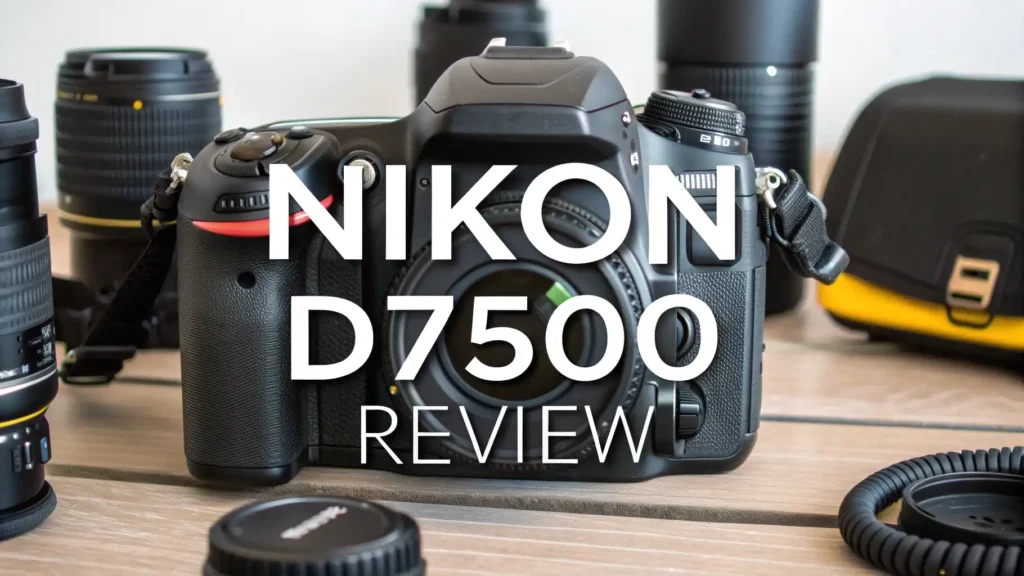
The Nikon D7500 feels solid in your hands. The camera body measures 4.1 by 5.4 by 2.9 inches and weighs 1.4 pounds without lens.
This weight gives you confidence without causing arm fatigue during long shooting sessions. The magnesium alloy frame provides weather sealing that protects your investment from dust and moisture.
The grip design accommodates different hand sizes comfortably. Controls fall naturally under your fingers. The top LCD displays all critical settings at a glance.
The deep grip lets you hold the camera securely with larger lenses attached. Button placement follows Nikon’s ergonomic philosophy, which means you can adjust settings without taking your eye from the viewfinder.
The tilting touchscreen adds modern convenience to the classic DSLR design. You can shoot from low angles or over crowds without contorting your body. The 3.2 inch LCD screen with 922k dots shows your images clearly even in bright sunlight.
Image Quality and Sensor Performance Excellence
The D7500 uses the same sensor as Nikon’s flagship D500. This 20.9 megapixel DX format sensor removes the optical low pass filter for maximum sharpness. You get images that pop with detail and clarity. Colors look natural and vibrant right out of the camera.
High ISO performance surprises many users. The camera produces clean images at ISO 3200 and remains usable at ISO 6400. This capability lets you shoot in challenging light conditions without flash. The EXPEED 5 image processor reduces noise while preserving fine details.
Dynamic range stands out as a major strength. You can recover shadow details and manage highlight rolloff effectively in post processing. The 14 bit RAW files give you plenty of data to work with. Whether you shoot landscapes, portraits, or action, the sensor delivers consistently excellent results.
Autofocus System That Never Misses
The D7500 inherits its autofocus system from professional Nikon bodies. The 51 point Multi CAM 3500FX II AF module covers a wide area of the frame. You get 15 cross type sensors for added precision. The system works down to -3 EV, which means you can focus in near darkness.
Subject tracking performs admirably for wildlife and sports photography. The 180k pixel RGB metering sensor analyzes the scene and helps predict subject movement. This advanced metering gives the D7500 an edge over many competitors in its price range.
Focus modes offer flexibility for different shooting situations. Single point AF gives you precise control for static subjects. Dynamic area AF tracks moving subjects across the frame. 3D tracking follows subjects that move erratically. The AF system responds quickly and accurately, making it easy to capture sharp images of fast action.
Top 3 Alternatives for Nikon D7500


Shooting Speed and Buffer Capacity
The D7500 shoots at 8 frames per second continuously. This speed captures action sequences smoothly. The buffer handles approximately 100 JPEGs or 50 RAW files before slowing down. This capacity exceeds what most photographers need for typical shooting situations.
The quick frame rate combined with excellent autofocus creates a powerful combination for sports and wildlife photography. You can track birds in flight, capture decisive sports moments, or photograph your kids playing without missing critical action. The camera clears the buffer reasonably fast, letting you continue shooting without long delays.
Shutter lag remains minimal. When you press the button, the camera responds instantly. This responsiveness helps you capture fleeting moments. The shutter is rated for 150,000 actuations, which should last many years for typical use.
Video Capabilities for Content Creators
The D7500 records 4K UHD video at 30, 25, or 24 frames per second. The 4K footage looks sharp with good color reproduction. The camera uses the full width of the sensor for 4K recording, avoiding the extreme crop that hampers some competing models.
Full HD recording goes up to 60 frames per second for smooth slow motion effects. You get clean HDMI output for external recorders. The camera includes stereo microphone input and headphone monitoring, which content creators appreciate.
Video autofocus works reasonably well in good light, though it cannot match mirrorless systems. Manual focus with focus peaking helps achieve precise results. The articulating screen proves invaluable for video work, letting you monitor your shot from various angles. Time lapse and interval timer functions expand your creative options.
Battery Life and Power Management
The EN EL15a battery provides excellent longevity. You get approximately 950 shots per charge according to CIPA standards. Real world usage often exceeds this number. This battery life surpasses most mirrorless cameras significantly.
Long battery life means you can shoot all day without anxiety. You spend less time swapping batteries and more time taking pictures. The camera charges via USB, which adds convenience when traveling. You can use portable power banks to top up the battery in the field.
Power management works efficiently. The camera enters sleep mode quickly to conserve energy. It wakes instantly when you touch any control. Battery level indicators give you accurate information about remaining power. Having spare batteries ensures you never miss a shot.
Connectivity Features for Modern Workflow
The D7500 includes built in WiFi and Bluetooth. These wireless options let you transfer images to your smartphone quickly. The SnapBridge app maintains a constant low power connection between camera and phone. Your photos sync automatically as you shoot.
Remote shooting through the app gives you creative possibilities. You can trigger the shutter, adjust settings, and review images from your phone. This feature helps with self portraits, group photos, or wildlife photography where you need distance from the camera.
The camera includes USB connectivity for fast file transfers to your computer. You get standard HDMI output for displaying images on TVs or monitors. These connection options integrate smoothly into modern photography workflows.
Build Quality and Weather Sealing
Nikon builds the D7500 to professional standards. The magnesium alloy chassis provides structural rigidity while keeping weight manageable. Weather sealing protects critical areas from moisture and dust. You can shoot in light rain or dusty conditions without worry.
The camera feels substantial without being excessively heavy. Build quality inspires confidence. Buttons and dials operate smoothly with positive feedback. The shutter sounds crisp and mechanical. Everything about the construction suggests this camera will last many years.
The lens mount uses metal construction that handles heavy lenses securely. The tripod socket aligns properly with the lens optical axis. Attention to detail shows throughout the design. This camera can handle professional use and amateur enthusiasm equally well.
Low Light Performance and High ISO Handling
The D7500 excels when light gets scarce. The sensor and processor combination produces clean images at ISO 3200 without hesitation. ISO 6400 remains perfectly usable for most situations. Even ISO 12800 can work for emergency situations where you absolutely need the shot.
The absence of an optical low pass filter helps maintain detail at high ISOs. Noise reduction algorithms work effectively without creating waxy skin tones or losing texture. You retain the ability to adjust noise reduction in post processing with RAW files.
Low light autofocus performs admirably. The -3 EV focus capability lets you lock focus in very dim conditions. This ability proves valuable for event photography, indoor sports, or evening wildlife observation. You can shoot concerts, weddings, and other challenging situations with confidence.
Lens Compatibility and System Flexibility
The D7500 works with Nikon F mount lenses dating back decades. You can use vintage glass or the latest designs. AF S and AF P lenses provide full functionality. Even older AF D lenses work well, though some features may be limited.
The DX format sensor means crop factor of 1.5x applies to lens focal lengths. A 50mm lens becomes effectively 75mm. This crop factor benefits wildlife and sports photographers who need extra reach. Portrait photographers appreciate the flexibility of using full frame lenses on the DX body.
The camera meter works with non CPU lenses when you input focal length and aperture data. This compatibility extends the range of usable lenses significantly. You gain access to Nikon’s vast lens ecosystem spanning many decades.
Nikon D7500 with 18-140mm Lens Bundle

This bundle provides everything you need to start shooting immediately. The AF S DX 18 140mm f/3.5 5.6G ED VR lens covers a versatile range from wide angle to telephoto.
The lens includes vibration reduction for sharper handheld shots. This kit suits travel photography, events, and general purpose shooting where you want one lens that handles most situations.
Price Value Comparison in 2026
The D7500 currently sells for approximately $696 for body only on Amazon. This pricing represents excellent value for the features offered. You get flagship autofocus, excellent image quality, and professional build quality at an enthusiast price point.
Compared to mirrorless alternatives, the D7500 offers superior battery life and works with decades of existing Nikon lenses. The price includes proven technology that professionals trust. You avoid the growing pains of newer mirrorless systems.
Used market prices make the D7500 even more attractive. Well maintained bodies sell for significantly less than new. This camera holds value well due to its solid reputation. The combination of features and price makes it one of the best values in APS C photography today.
Who Should Buy the Nikon D7500
This camera suits photographers who value reliability and proven performance. Wildlife photographers appreciate the fast autofocus and shooting speed. Sports photographers benefit from excellent tracking and buffer capacity. Event photographers love the low light capability and battery life.
The D7500 works wonderfully for serious hobbyists stepping up from entry level cameras. You get professional features without overwhelming complexity. The camera grows with your skills over time.
Nikon users with existing F mount lenses find the D7500 an easy upgrade path. You can continue using lenses you already own. The camera integrates seamlessly into existing Nikon workflows and accessories.
FAQs
Is the Nikon D7500 still worth buying in 2026?
Yes, the Nikon D7500 remains an excellent camera in 2026. The image quality holds up against newer cameras. The autofocus system performs admirably for most photography needs. Battery life exceeds mirrorless alternatives significantly. The used market offers great values. If you already own Nikon lenses or prefer DSLR ergonomics, the D7500 deserves serious consideration.
How does the D7500 compare to mirrorless cameras?
The D7500 offers superior battery life compared to most mirrorless options. You get approximately 950 shots per charge versus 300 to 400 for many mirrorless bodies. The optical viewfinder works in any light without drain on the battery. However, mirrorless cameras provide advantages like face and eye detection autofocus, better video autofocus, and typically smaller sizes. Choose based on your priorities.
Can the Nikon D7500 shoot professional quality images?
Absolutely. The D7500 uses the same sensor and processor as Nikon’s flagship D500. Professional photographers use this camera for sports, wildlife, weddings, and commercial work. The 20.9 megapixel resolution suffices for most professional applications. Image quality rivals cameras costing significantly more. Your skill matters more than the camera body.
What are the main weaknesses of the D7500?
The D7500 lacks some modern features like in body image stabilization found in newer cameras. The single SD card slot may concern professional photographers who want redundancy. The 4K video has a small crop factor. These limitations rarely affect most users. The camera excels at its core mission of capturing excellent still images.
How long will the Nikon D7500 remain relevant?
The D7500 should remain a capable camera for at least 5 to 10 more years. Camera technology has plateaued somewhat. The image quality and features meet professional standards today. Nikon continues supporting the camera with firmware updates. The shutter is rated for 150,000 actuations, which equals many years of use for typical photographers. Good cameras last longer than marketing cycles suggest.