Polaroid Sun 660 Review 2026: Is It Worth the Hype?
Are you ready to step back in time while creating fresh new memories? The Polaroid Sun 660 is calling your name! This iconic instant camera from the 1980s has captured millions of hearts.
It continues to do so in 2026. Think about it. You press a button. A real photo slides out. You shake it gently. Colors appear like magic. That feeling never gets old.
The Sun 660 brings something special to the table. It has Sonar Autofocus technology. This was groundbreaking back in the day. It still works beautifully today.
Key Takeaways:
- Sonar Autofocus System: The Polaroid Sun 660 features ultrasonic autofocus technology. This means the camera uses sound waves to measure distance. It focuses automatically on your subject. You don’t need to guess or adjust anything. The camera does the work for you. This results in sharper photos compared to fixed focus models.
- Uses 600 Film Format: This camera works with Polaroid 600 film. The film is still produced today by Polaroid. Each pack contains 8 shots. The photos measure 3.1 x 3.1 inches. They develop in about 15 minutes. The film creates that classic Polaroid look everyone recognizes.
- Built In Flash: The Sun 660 comes with an automatic flash unit. It fires when needed. You can also force the flash on for fill lighting. This helps in bright outdoor conditions. Shadows disappear. Faces look even and well lit.
- Budget Friendly Vintage Option: Compared to new instant cameras, the Sun 660 offers excellent value. You can find these cameras at thrift stores, online marketplaces, and specialty shops. Prices range from 30to80 depending on condition.
- Simple Point And Shoot Operation: No complicated settings here. Turn on the camera. Look through the viewfinder. Press the red button. Your photo ejects automatically. The camera handles exposure, focus, and flash decisions on its own.
- Iconic 1980s Design: The Sun 660 has that distinctive boxy shape. The striped rainbow pattern on some models screams retro cool. It’s a conversation starter at any gathering.

The History Behind Polaroid Sun 660
The Polaroid Sun 660 first arrived in stores during 1981. This was a golden era for instant photography. Polaroid dominated the market. The company wanted to create something special. They succeeded beyond expectations.
The “Sun” name came from the camera’s ability to work well in sunny conditions. The “660” indicated it was part of the 600 series film cameras. This series replaced the older SX 70 film format. The 600 film was faster and more forgiving. It handled different lighting situations better.
Edwin Land, the founder of Polaroid, believed in instant gratification. He wanted people to see their photos immediately. The Sun 660 embodied this vision perfectly. It made photography accessible to everyone. Grandparents, kids, and professional artists all used this camera.
The Sonar Autofocus feature set the 660 apart from cheaper models. Polaroid licensed this technology from another company. They refined it for photography use. The tiny gold disc on the front is the sonar sensor. It sends out ultrasonic pulses. These bounce back from your subject. The camera calculates the distance instantly.
Production continued throughout the 1980s and into the 1990s. Millions of units sold worldwide. Today, these cameras represent a beloved piece of photographic history. They work just as well in 2026 as they did decades ago.
Design And Build Quality
The Polaroid Sun 660 has a distinctive look. You recognize it instantly. The camera body is made from durable plastic. It feels solid in your hands. The weight is approximately 1.2 pounds with film loaded.
The folding design makes storage convenient. When closed, the camera lies flat. Open it up and you’re ready to shoot. A satisfying click tells you it’s locked in position. This design protects the lens and viewfinder when not in use.
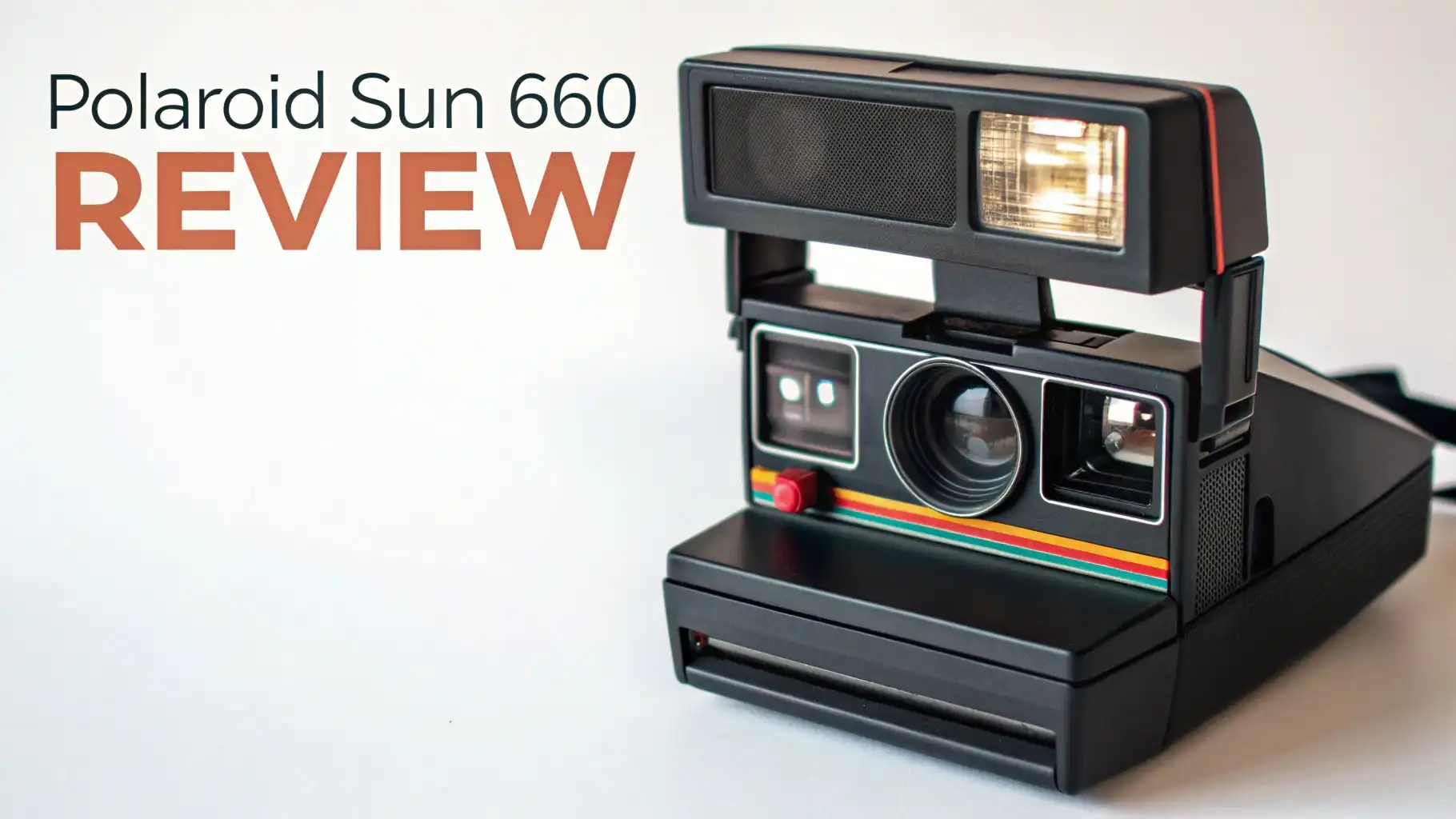
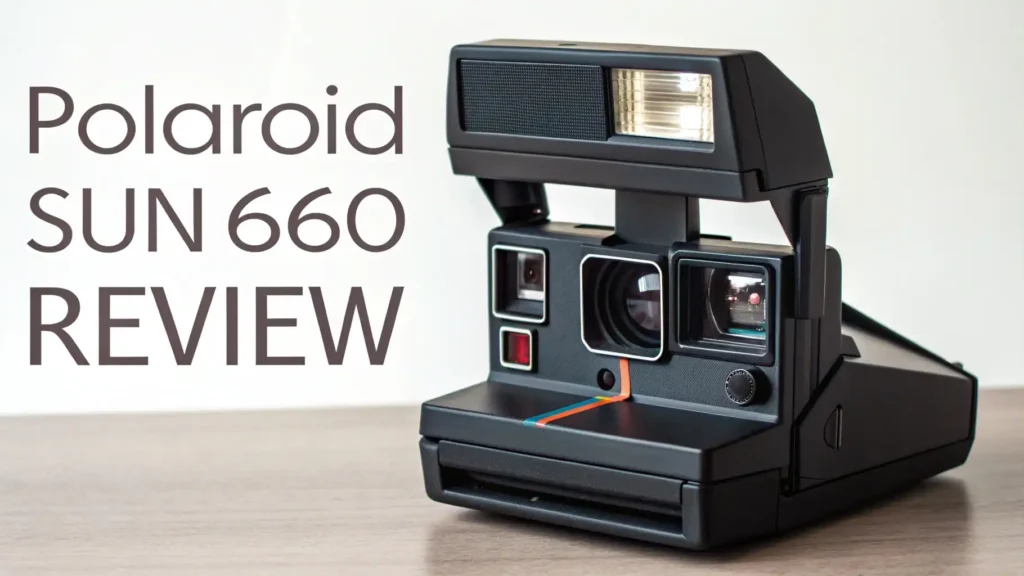
Looking at the front, you see the main lens surrounded by a decorative ring. Above it sits the Sonar sensor. This gold colored disc is the autofocus system’s eye. Below the lens is the light sensor for exposure calculation.
The viewfinder sits on top. It’s bright enough for most conditions. You see approximately what the lens sees. There’s a small offset between viewfinder and lens. This causes slight framing differences at close distances. It’s a normal characteristic of cameras from this era.
The flash unit folds up from the body. It’s powered by the film pack battery. The flash has good power for indoor shots. It reaches subjects up to 14 feet away. A ready light glows red when charged.
Color options varied over the years. Classic models feature rainbow stripes. Later versions came in solid colors. All black models look particularly sleek. No matter which version you find, the build quality remains consistently good.
Top 3 Alternatives For Polaroid Sun 660


How The Sonar Autofocus Works
The Sonar Autofocus system on the Sun 660 is fascinating technology. It works like a bat’s echolocation. The camera sends out ultrasonic sound waves. These waves are beyond human hearing range. They travel toward your subject.
When the sound waves hit your subject, they bounce back. The camera has a receiver that catches these returning waves. A small computer inside calculates the time difference. This tells the camera exactly how far away the subject is. The lens moves to the correct focus position.
The whole process takes a fraction of a second. You press the shutter halfway. The camera focuses. Press fully and the photo is taken. The focus range extends from 4 feet to infinity. Anything within this range gets sharp focus.
There are some limitations to understand. Glass and mirrors can confuse the sonar. Sound waves pass through glass. They don’t bounce back correctly. If you’re shooting through a window, manual focus override helps.
Extremely soft or sound absorbing surfaces may not reflect well. Thick curtains or fuzzy materials might cause focus errors. In practice, this rarely happens. Most everyday subjects work perfectly.
The technology was revolutionary in the 1980s. It remains reliable and effective today. Many photographers prefer the Sun 660’s focusing system over fixed focus vintage cameras.
Film Options And Availability In 2026
Finding film for your Polaroid Sun 660 is easier than ever in 2026. Polaroid produces fresh 600 film regularly. You can purchase it from multiple sources.
The standard Color 600 Film is most popular. Each pack contains 8 shots. Colors are warm and saturated. The classic white frame surrounds every photo. Development takes approximately 15 minutes at room temperature.
Black and White 600 Film offers an artistic alternative. The monochrome look is dramatic. Contrast is strong. These photos have a timeless quality. Many portrait photographers prefer this option.
Special Edition Films appear throughout the year. Polaroid releases frames with different colors and designs. Holiday themes, artistic borders, and limited editions sell quickly. Collectors seek these out eagerly.
Film prices have stabilized in recent years. Expect to pay between 16and22 per pack. Buying multipacks saves money. Online retailers often offer the best deals.
Storage matters for film longevity. Keep unused packs in a cool, dry place. Refrigeration extends shelf life. Let refrigerated film warm up before loading. About 30 minutes at room temperature works well.
Expired film creates unpredictable results. Colors shift. Contrast changes. Some photographers enjoy these effects intentionally. Fresh film delivers consistent, reliable results.
Taking Your First Photos
Ready to shoot with your Polaroid Sun 660? Follow these simple steps for great results.
Step One: Load the film pack. Open the film door on the back. Slide the pack in with the dark slide facing up. The gold contacts on the pack connect with the camera’s contacts. Close the door firmly. The dark slide ejects automatically.
Step Two: Open the camera body. Pull the viewfinder section up until it clicks. The camera is now ready. The flash unit can stay down for outdoor shots.
Step Three: Frame your subject through the viewfinder. Position your subject in the center. Leave a small margin around important elements. The actual photo area is slightly different from what you see.
Step Four: Press the shutter button gently. The camera focuses automatically. You’ll hear a quiet click. The motor activates. Your photo slides out from the bottom.
Step Five: Handle the photo carefully. Don’t shake it. This is a myth that can actually damage the photo. Place it face down in a dark area. Or cover it with your hand. Light sensitivity during development can affect colors.
Step Six: Wait patiently. Full development takes 10 to 15 minutes. Warmer temperatures speed this up. Colder conditions slow it down. Watch the image appear gradually.
Your first shots might not be perfect. Practice improves results. Learn how the camera sees. Adjust your technique based on outcomes.
Tips For Getting Better Results
Want to maximize your Sun 660 photography? These tips will help you capture stunning images.
Lighting is everything. The camera performs best in bright, even light. Open shade works beautifully. Direct sunlight creates harsh shadows. Cloudy days produce soft, flattering results. Indoor shots need the flash.
Mind the distance. The Sonar Autofocus works between 4 feet and infinity. Subjects closer than 4 feet appear blurry. For portraits, stay at least 5 feet away. This also creates pleasing proportions for faces.
Use the flash outdoors. This seems counterintuitive. However, fill flash eliminates harsh shadows. Faces look more even. Colors appear more saturated. The camera’s flash is not strong enough to overpower sunlight.
Protect your photos immediately. Shield ejected photos from light. The chemical layers are sensitive during development. A dark pocket or bag works well. Some photographers use a special development shield.
Temperature affects development. Keep photos warm for better colors. In cold weather, put them inside your jacket. The chemicals react properly at around 70 degrees Fahrenheit. Cold photos develop slowly and may have color shifts.
Experiment with composition. Don’t center everything. Try the rule of thirds. Include interesting backgrounds. Frame your subjects with environmental elements. Each shot costs money. Make them count by thinking before pressing the button.
Common Issues And Troubleshooting
Even reliable cameras have occasional problems. Here’s how to solve common Sun 660 issues.
Photos are too dark: The battery might be weak. 600 film packs contain their own battery. A fresh pack usually solves this. Also check if you’re shooting in very low light. The flash needs time to recharge between shots.
Photos are blurry: Ensure subjects are at least 4 feet away. Hold the camera steady while pressing the shutter. Shaky hands cause motion blur. Support your elbows against your body for stability.
The camera won’t turn on: Check if a film pack is loaded. The camera draws power from the film pack battery. No film means no power. Also verify the pack is inserted correctly with contacts aligned.
Flash doesn’t fire: The flash might be disabled. Ensure the flash is in the up position. Wait for the ready light before shooting. A red glow indicates full charge. If it never lights, the flash circuit may need repair.
Photos have strange colors: This often indicates expired film. Check the expiration date on your film packs. Old film produces unpredictable results. Heat damaged film also shows color problems.
Rollers leave marks on photos: The exit rollers spread developing chemicals. Dirty rollers create uneven development. Clean them gently with a soft cloth. Inspect rollers for debris or dried chemicals.
Camera makes grinding noises: Internal gears may need lubrication. This requires professional service. A camera repair specialist can restore smooth operation.
Comparing Sun 660 To Modern Instant Cameras
How does the vintage Sun 660 stack up against 2026 options? Let’s examine key differences.
Photo Size: The Sun 660 produces larger photos than Instax Mini cameras. Polaroid 600 images measure 3.1 x 3.1 inches. Instax Mini prints are only 2.4 x 1.8 inches. Polaroid Now matches the 600 size. Instax Square comes close at 2.4 x 2.4 inches.
Film Cost: Polaroid 600 film costs more per shot than Instax. Expect roughly 2perPolaroidphoto.InstaxMinirunsabout0.60 per shot. This difference adds up over time. Budget conscious photographers may prefer Instax.
Build Quality: The Sun 660 was built to last. Its construction surpasses many modern plastic cameras. However, cameras like the Instax Mini 90 and Polaroid Now+ offer excellent build quality too.
Features: Modern cameras include features the Sun 660 lacks. Self timers, multiple exposure modes, and Bluetooth connectivity come standard on current models. The Sun 660 offers pure simplicity.
Image Character: This is subjective but important. Polaroid 600 photos have a distinctive look. Colors are warm and slightly dreamy. Modern Polaroid film maintains this character. Instax photos appear sharper and cooler in tone.
Reliability: New cameras come with warranties. The Sun 660 relies on decades old electronics. Finding a working unit requires some luck. Modern cameras offer predictable performance out of the box.
Final Verdict: Is The Polaroid Sun 660 Worth It?
After examining every aspect, what’s the conclusion? The Polaroid Sun 660 remains an excellent choice for instant photography enthusiasts.
This camera delivers something modern options can’t replicate. Authentic vintage character shines through every shot. The Sonar Autofocus system works reliably after all these years. Build quality exceeds many current products. The design evokes warm nostalgia.
However, consider the practical aspects. Film costs add up quickly. Each pack provides only 8 shots. The camera lacks modern conveniences like self timers. Finding a functional unit requires effort.
For the right photographer, none of these drawbacks matter. The experience of using a Sun 660 brings joy. Watching a photo develop never gets old. Sharing physical prints creates meaningful connections.
If you appreciate photography history and vintage aesthetics, buy one. If you need maximum convenience and lowest running costs, consider Instax alternatives. If you want classic Polaroid with modern features, the Polaroid Now series deserves attention.
The Polaroid Sun 660 earned its legendary status. Four decades later, it continues earning new fans. That speaks volumes about its enduring appeal.
Frequently Asked Questions
What Film Does The Polaroid Sun 660 Use?
The Polaroid Sun 660 uses 600 type film exclusively. This film format was introduced in 1981 specifically for 600 series cameras. Modern Polaroid produces fresh 600 film in color, black and white, and special edition varieties. Each pack contains 8 shots. Do not use i Type film in this camera. The Sun 660 requires the battery included in 600 film packs.
How Much Does Polaroid 600 Film Cost?
Polaroid 600 film typically costs between 16and22 per pack of 8 shots. This works out to roughly $2 per photo. Buying multipacks reduces the per shot cost slightly. Special edition films cost more. Black and white film prices match color film. Prices have remained stable in recent years as production increased.
Can I Use The Polaroid Sun 660 Indoors?
Yes, the Sun 660 works well indoors thanks to its built in flash. The flash automatically fires when light levels are low. For best results, keep subjects within 14 feet of the camera. The flash needs about 10 seconds to recharge between shots. Indoor photos often have warmer colors due to mixed lighting.
Why Are My Polaroid Photos Coming Out Dark?
Dark photos usually indicate a weak battery in the film pack. The 600 film pack contains the battery that powers the camera. Try a fresh pack of film. Also ensure you’re not shooting in extremely low light conditions. The flash has limits in very dark environments. Cold temperatures can also affect battery performance.
How Long Do Polaroid Sun 660 Photos Take To Develop?
Polaroid 600 photos take approximately 10 to 15 minutes to fully develop at room temperature. Development begins immediately after ejection. You’ll see the image appear gradually. Warmer conditions speed up development. Cold weather slows it significantly. Protect photos from bright light during the first few minutes of development.
Is The Polaroid Sun 660 Still Being Made?
No, the Polaroid Sun 660 is no longer manufactured. Production ended in the 1990s. However, millions of units were made and many remain functional today. You can purchase used cameras from various sellers. Some companies sell refurbished units with guarantees. The camera’s solid construction helps them survive decades of storage.
How Do I Clean My Polaroid Sun 660?
Clean the exterior with a soft, dry cloth. For stubborn dirt, use a slightly damp cloth. Clean the lens gently with lens tissue or a microfiber cloth. Clean the rollers with a soft dry cloth to remove chemical residue. Avoid using harsh chemicals or excessive moisture. Never spray liquids directly on the camera.