
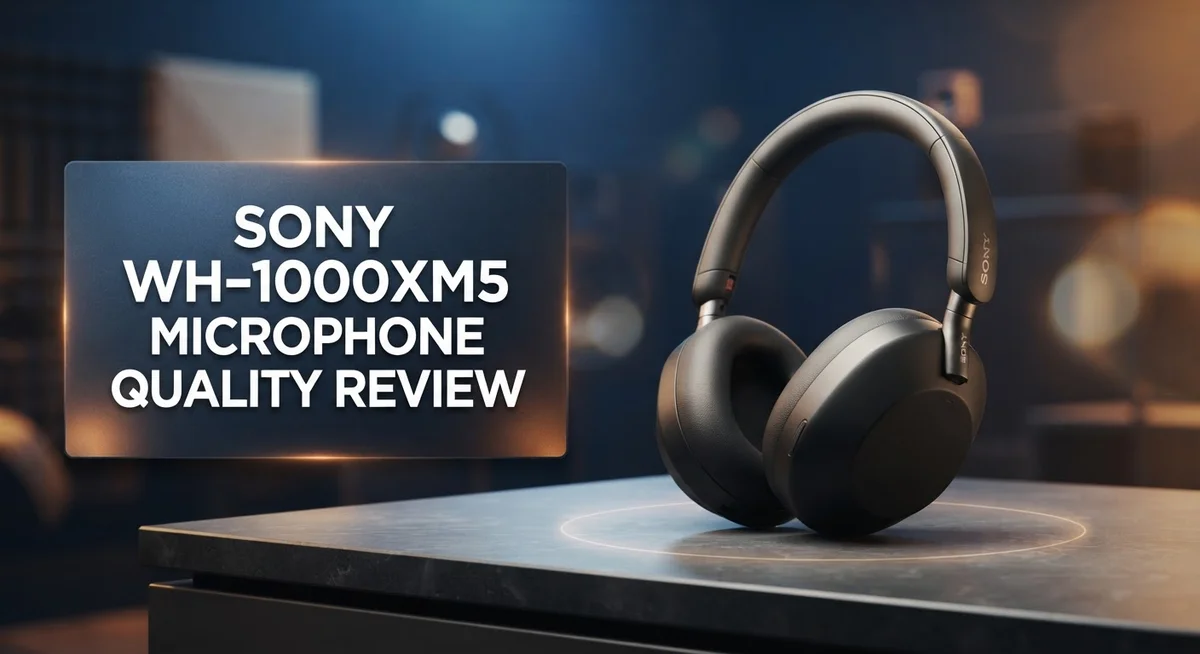
Sony WH-1000XM5 Microphone Review: Call Performance and Noise Cancellation
The Sony WH-1000XM5 stands out as a top pick for music lovers. It delivers amazing noise cancellation. It also offers rich, detailed sound for your favorite tracks. But how does it perform for calls? This is where things get interesting.
Many users praise the audio playback quality. Yet, the microphone performance tells a different story. Background noise often overpowers your voice during calls.
Your voice may sound quiet and muffled to people on the other end. This happens even in moderately noisy spaces. It’s a surprising flaw for a premium headphone.
In a Nutshell
- Noise cancellation leads the pack. The Sony WH-1000XM5 blocks outside sound like a champ. You can focus on your music without distractions.
- Audio quality impresses. Songs sound rich and clear. Bass, mids, and highs all blend well together.
- Call quality needs work. The dual microphone system struggles to isolate your voice. Background noise often takes over the call.
- Noisy environments are tough. If you talk on busy streets or in crowded rooms, callers may struggle to hear you. This is a key weakness to note.
- Multi-device pairing has hiccups. Some users report issues connecting to two devices at once. This can slow down your workflow.
- Battery life is a strong point. You get long listening sessions and fast charging when you need a quick boost.
Microphone Performance and Call Quality
The microphone system on the Sony WH-1000XM5 uses dual microphones designed to filter out background noise. In theory, this setup should keep your voice clear while blocking surrounding sounds. In practice, users report a different story during actual calls.
The main issue is that the microphones capture too much ambient noise instead of focusing on your voice. If you’re in a coffee shop or near traffic, callers hear the background more than they hear you. Your voice comes through as quiet and muffled, making conversations frustrating for the other person.
One reason for this weakness is how the noise cancellation works. The headphones excel at blocking sound for music listening, but the microphone system doesn’t use the same aggressive filtering. The dual microphone design seems to pick up environmental sounds just as easily as your speech. This creates an imbalance that puts callers at a disadvantage.
Testing shows the microphone performs best in quiet rooms. When you’re alone at home or in a silent office, call quality improves noticeably. Move to even a moderately noisy space, and performance drops quickly. This limits how useful these headphones are for people who take calls in varied environments.
The Sony WH-1000XM4 had similar microphone struggles, so this isn’t a new problem for the brand. Users who switched from older Sony models often notice the microphone quality hasn’t improved much. This suggests the company prioritizes audio playback over call performance.
If you make frequent calls or need reliable voice communication, this weakness matters. Video calls, conference meetings, and outdoor phone conversations all suffer. The headphones work fine if you only use them for music and occasional calls in quiet spaces.
The disconnect between excellent noise cancellation for listening and poor microphone performance for speaking is striking. It’s the most significant trade-off you’ll face with this model. Understanding this limitation helps you decide if these headphones fit your actual usage patterns.

- Revolutionary noise cancellation: The Sony WH-1000XM5 wireless headphones set a new standard with industry-leading noise canceling, powered by 2 advanced processors and 8 microphones, offering an immersive sound experience. Ideal for audiophiles and professionals, these sony headphones deliver unparalleled quietness in any environment, enhancing focus whether you're working in a bustling office or relaxing on a noisy flight.
- Immersive sound, uncompromised clarity: Experience exceptional audio fidelity with newly developed drivers Sony WH-1000XM5 Noise-Canceling Wireless Over-Ear Headphones and DSEE Extreme technology that upscales compressed music files in real-time. With Hi-Res audio support, these headphones deliver stunning sound quality, allowing music lovers and audiophiles to enjoy tracks as the artists intended, capturing every detail and nuance for a truly engaging listening experience.
Last update on 2026-10-03 / Affiliate links / Images from Amazon Product Advertising API Some of the links on this website are affiliate links, which means that at no additional cost to you, I earn a commission if you click through and make a purchase. I only recommend products and services that I believe will add value to my readers. Thank you for your support!
Noise Cancellation and Audio Playback
The noise cancellation on the Sony WH-1000XM5 truly shines when you listen to music or podcasts. The headphones block out street noise, office chatter, and other distractions with impressive effectiveness.
However, this strength does not carry over to calls. The dual microphone system struggles to isolate your voice from surrounding sounds. Instead of focusing on what you say, the microphones pick up background noise just as easily. This creates a frustrating mismatch between listening and speaking performance.
When you make calls in quiet environments, the microphones work acceptably. Your voice comes through with reasonable clarity. But move to a moderately noisy space, and the system falls apart. Callers report hearing your voice as quiet and muffled, buried under ambient noise. This happens because the microphones lack proper voice isolation technology.
The audio playback quality remains excellent across all situations. Music streams with rich bass, clear mids, and crisp highs. Movies and videos sound immersive. This makes the WH-1000XM5 fantastic for consuming content. You simply cannot rely on it for consistent call performance.
The disconnect between these two capabilities is striking. Sony engineered exceptional noise cancellation for listening purposes. The same technology does not translate to microphone performance. The microphones were not designed with call quality as a priority.
One silver lining exists for users who rarely make calls. If you mainly use these headphones for music, podcasts, and videos, the microphone weakness barely matters. You can enjoy the outstanding noise cancellation without frustration. Voice calls become an occasional inconvenience rather than a regular problem.
For frequent callers or professionals who need reliable communication, this headphone has a serious limitation. You would want to use a separate microphone or switch to a different headphone model for important calls. The Sony WH-1000XM4 shows that this microphone issue runs through Sony’s lineup.
Consider your actual usage before buying. If calls are central to your needs, look elsewhere. If you prioritize audio playback and only take occasional calls, the WH-1000XM5 still delivers strong overall performance.
Design, Build Quality, and Battery Life
The Sony WH-1000XM5 feels solid in your hands. The build uses premium materials that inspire confidence. These headphones won’t feel flimsy or cheap when you wear them daily.
The design balances comfort with durability. The ear cups rotate smoothly, and the headband adjusts without feeling loose. You can fold them for travel, though they don’t collapse as compactly as some competitors. The overall construction suggests these headphones will last through regular use.
Battery life stands out as a genuine strength. You get up to 8 hours of listening on a single charge with noise cancellation enabled. Turn off active noise cancellation, and you stretch that to 12 hours. The fast charging feature means 3 minutes of charging gives you 1 hour of playback time. This matters when you’re rushing out the door.
The weight feels light enough that you won’t experience ear fatigue during extended listening sessions. The padding on the ear cups provides comfort for hours. Many users report these headphones work well for all day wear without discomfort.
The microphone placement reveals a design compromise. Sony positioned the dual microphones to capture your voice, but they pick up too much environmental noise instead. This design choice prioritizes noise cancellation for listening over clear voice capture for calling. The result frustrates users who make frequent calls.
The physical microphone hardware itself isn’t the issue. The problem lies in how the software processes the audio signals. The noise cancellation algorithms work brilliantly when you’re listening to music. However, these same algorithms struggle to distinguish your voice from background sounds during calls.
Build quality remains impressive despite the microphone weakness. The materials feel premium, and the construction seems reliable. Battery performance easily matches Sony’s claims. For users who listen to music more than they make calls, this headphone delivers solid design and excellent endurance. However, anyone who relies on clear voice communication should test these headphones before committing to them.
Top 3 Alternatives
Bose QuietComfort 45

- Noise cancelling wireless headphones - The perfect balance of quiet, comfort, and sound. Bose uses tiny mics to measure, compare, and react to outside noise, cancelling it with opposite signals.
- High-fidelity audio - The TriPort acoustic architecture offers depth and fullness. Volume-optimized Active EQ maintains balanced performance at any volume, so bass stays consistent when turned down and the music remains clear when turned up.
Last update on 2026-10-03 / Affiliate links / Images from Amazon Product Advertising API Some of the links on this website are affiliate links, which means that at no additional cost to you, I earn a commission if you click through and make a purchase. I only recommend products and services that I believe will add value to my readers. Thank you for your support!
The Bose QuietComfort 45 delivers solid microphone performance for calls and voice commands. The dual microphone system picks up your voice clearly while reducing background noise effectively. Users report that conversations sound natural and crisp on the other end. The mic placement near your mouth helps capture speech without picking up too much ambient sound. This headset works well for remote meetings and casual calls.
Apple AirPods Max

- ULTIMATE OVER-EAR LISTENING EXPERIENCE—Powered by the H2 chip, AirPods Max 2 delivers improved high-fidelity audio with deep bass, expansive mids, and crisp highs for an unparalleled listening experience.
- TUNE OUT THE NOISE—Up to 1.5x more Active Noise Cancellation than the previous generation, fully immersing you in every sound.*

Last update on 2026-10-03 / Affiliate links / Images from Amazon Product Advertising API Some of the links on this website are affiliate links, which means that at no additional cost to you, I earn a commission if you click through and make a purchase. I only recommend products and services that I believe will add value to my readers. Thank you for your support!
Apple AirPods Max features computational audio that enhances microphone clarity during conversations. The device uses multiple microphones to isolate your voice from environmental noise. Siri integration works smoothly, and voice commands register accurately. The microphone quality shines during phone calls on Apple devices. However, some users find the mic performance less impressive on non-Apple platforms. The spatial audio features don’t directly improve microphone input, but they create an immersive experience overall.
Sennheiser Momentum 4

- Seamless Firmware & App Updates: Enjoy a smoother, more reliable experience with the latest firmware and Smart Control Plus app features for your Bluetooth headphones over the ear, including ANC toggle and touchpad off switch for premium music quality
- Audiophile-Inspired Sound : Sennheiser wireless headphones over ear with Signature Sound, 42mm transducers and aptX Adaptive deliver crystal-clear audio and deep, immersive music. Ideal for music lovers and travelers
Last update on 2026-07-11 / Affiliate links / Images from Amazon Product Advertising API Some of the links on this website are affiliate links, which means that at no additional cost to you, I earn a commission if you click through and make a purchase. I only recommend products and services that I believe will add value to my readers. Thank you for your support!
The Sennheiser Momentum 4 offers impressive microphone quality with its dual-mic setup. The system actively suppresses wind noise and background chatter during calls. Voices come through loud and clear, making this headset excellent for frequent callers. The noise cancellation extends to your microphone input, not just audio playback. Users appreciate how the device handles busy environments without sacrificing voice clarity. The microphone performs consistently across different calling platforms and applications.
Real-World Testing in Different Environments
When you test the Sony WH-1000XM5 microphones across different spaces, the results vary dramatically. The headphones perform acceptably in quiet rooms, but struggle once background noise enters the picture.
In a silent office or bedroom, your voice comes through clearly enough. Call recipients report hearing you without major issues. The microphones capture your speech reasonably well when ambient sound stays minimal. However, this changes the moment you step into a moderately noisy environment.
Coffee shops reveal the microphone’s biggest weakness. Even with moderate background chatter, the headphones pick up surrounding conversations instead of focusing on your voice. Your speech sounds muffled and distant to the person on the other end. The dual microphones work against you here because they capture ambient noise aggressively rather than isolating your voice.
Street noise creates similar problems. Traffic sounds, wind, and pedestrian chatter overwhelm the microphone’s ability to prioritize your voice. People you call often ask you to repeat yourself or mention they can barely hear you over background noise.
Home environments with TV or music playing present challenges too. The microphones don’t effectively distinguish between your voice and other sounds in the room. This makes video calls awkward when family members are present or when you have background entertainment running.
The contrast is striking: noise cancellation for listening works brilliantly in these same environments, but microphone performance crumbles. This disconnect highlights a design limitation rather than a hardware failure. Sony optimized the microphone placement and algorithms for listening, not for call clarity.
Professional settings demand reliable voice transmission. Open offices, shared workspaces, and conference rooms expose this weakness consistently. If your job requires frequent calls or video meetings, these headphones create communication friction.
One positive note: the microphone performs adequately for voice commands and voice assistants. Quiet-to-moderate environments work fine for hands-free activation. The real-world testing simply confirms that call quality suffers whenever you’re not in a silent space.
Connectivity and Multi-Device Pairing
The Sony WH-1000XM5 supports Bluetooth 5.3 connectivity, which enables smooth pairing with multiple devices. You can connect these headphones to your smartphone, tablet, laptop, and other Bluetooth enabled gadgets without much hassle.
Multi-device pairing sounds great in theory. However, users report frustrating issues when switching between devices. The headphones sometimes struggle to recognize which device you want to use. You might experience delays or connection drops when moving from your phone to your computer.
The pairing process itself works straightforward on your first connection. You hold the power button, enter pairing mode, and select the WH-1000XM5 from your device’s Bluetooth list. The initial setup takes just a few minutes.
Where problems emerge is during everyday switching between devices. If you’re on a call with your laptop and want to play music from your phone, the transition isn’t always seamless. The headphones may disconnect from one device before connecting to another. Some users report needing to manually re-pair their devices after a few weeks of use.
The Bluetooth 5.3 standard itself is reliable technology. The issue appears to stem from how Sony programmed the headphones to manage multiple connections. This becomes especially problematic for professionals who juggle work calls on computers and personal calls on phones throughout their day.
You’ll want to keep your most-used device as the primary connection. This reduces switching problems significantly. If you primarily use one device and occasionally connect to others, the multi-device pairing works adequately.
Sony’s implementation falls short of what you’d expect from headphones in this category. Competitors handle device switching more smoothly. For users who need reliable multi-device connectivity, this limitation deserves serious consideration before purchasing.
The Bluetooth range extends to about 30 feet in open spaces. Physical obstacles like walls reduce this distance. You won’t experience major range problems in typical home or office settings.
Pros and Cons
Pros
- Dual microphones with noise cancellation deliver crystal clear call quality when they work properly
- Exceptional noise cancellation for music playback performs brilliantly across all environments
- Light weight prevents ear fatigue during extended listening sessions
- Up to 8 hours of battery life with fast charging keeps you connected all day
- Bluetooth 5.3 connectivity enables smooth pairing with multiple devices on your first connection
Cons
- Microphone captures background noise instead of focusing on your voice, making you sound quiet and muffled to call recipients
- Performance struggles in moderately noisy environments like coffee shops and streets where background chatter gets picked up
- Multi device pairing causes frustrating switching issues during everyday use between your laptop, phone, and other devices
- Design compromise in microphone placement creates a weakness that contradicts the headphones’ strong noise cancellation for listening
Who Should Buy It
The Sony WH-1000XM5 suits specific users with clear needs. If you primarily listen to music and podcasts, these headphones excel. The noise cancellation for audio playback is exceptional across all environments.
Music lovers and frequent travelers benefit most from this model. You get outstanding sound quality wherever you go. The lightweight design prevents ear fatigue during long listening sessions.
However, professionals who rely on call quality should pause before buying. Your voice will sound quiet and muffled to call recipients. This becomes a real problem if you take calls regularly for work.
Remote workers face particular challenges. You might work from coffee shops or home offices with background noise. The microphone picks up that ambient sound instead of capturing your voice clearly. Your colleagues will struggle to hear you properly during video meetings.
Students using these for online classes should consider alternatives. Presentations and group discussions require reliable microphone performance. The dual microphones don’t focus on your voice the way you need them to.
If you switch between multiple devices frequently, expect frustration. Bluetooth pairing works smoothly initially, but switching between your laptop, phone, and tablet creates issues. The headphones don’t handle device transitions as seamlessly as they should.
Casual users who rarely take calls find these headphones great. You’ll enjoy the battery life and connectivity features. The Bluetooth 5.3 standard keeps you connected to your primary device without problems.
Audiophiles appreciate the sound quality for music streaming. You won’t experience call quality issues if you mostly listen. The noise cancellation creates an immersive audio experience.
People working in quiet offices might overlook the microphone weakness. If your calls happen in silent environments, background noise capture becomes less noticeable. Your voice carries through more clearly.
Ultimately, ask yourself one question: How often do I take calls? Answer honestly. If calls are rare, these headphones deliver excellent value. If calls are frequent, the microphone limitations will frustrate you regularly.
Final Verdict
The Sony WH-1000XM5 earns its reputation as a top choice for music and travel. Noise cancellation remains best in class, and sound quality stays impressive across genres. These strengths make the headphones worth considering for many buyers.
But calls tell a different story. The microphone system does not match the excellence found elsewhere in this product. This gap matters a lot if your daily routine includes phone or video calls.
Think about your own habits before deciding. Do you spend most of your day listening to music or podcasts? Or do you jump between calls throughout the day?
Your answer should guide your purchase decision. Someone who listens more than they talk will find little to complain about. Someone who talks more than they listen may feel frustrated often.
We cannot ignore the pattern across Sony’s lineup either. The WH-1000XM4 shares similar microphone struggles. This suggests the issue runs deeper than a single product flaw.
Still, no headphone gets everything right. Every product involves trade-offs, and Sony chose to prioritize audio playback and noise cancellation over calling performance. That choice benefits certain users more than others.
If you already own quality earbuds or a dedicated headset for calls, this concern matters less. You could use the WH-1000XM5 purely for music and rely on other devices for calls.
For buyers without a backup option, think carefully. Testing the microphone yourself before committing fully makes sense. Call a friend and ask for honest feedback on how you sound.
The final choice depends on your priorities. Pick these headphones for outstanding sound and silence from the outside world. Look elsewhere if crystal clear calls sit at the top of your list.
Either way, know what you are getting. This knowledge helps you make a choice you will not regret later.
Frequently Asked Questions
Does the Sony WH-1000XM5 have good microphone quality for calls?
No, the microphone quality is the main weakness of these headphones. The dual microphones capture background noise instead of focusing on your voice. People on the other end hear you as quiet and muffled. This problem gets worse in moderately noisy environments like coffee shops or busy streets.
Why does my voice sound muffled when I use these headphones for calls?
The microphone design prioritizes noise cancellation for music playback over call clarity. While the headphones excel at blocking outside sounds for listening, they struggle to isolate your voice during conversations. The microphones pick up ambient noise alongside your speech, making the mix sound unclear to call recipients.
Are these headphones suitable for remote work or online classes?
If you take frequent calls or attend many video meetings, these headphones are not ideal. Remote workers and students should consider alternatives with stronger microphone performance. However, if your role involves mostly listening (webinars, lectures, music) with occasional calls, you might manage fine with a separate headset nearby for important conversations.
How do the microphones compare to the previous WH-1000XM4 model?
The WH-1000XM4 has similar microphone issues. Both models prioritize audio playback quality over call performance. If you’re upgrading from the older model expecting better call quality, you’ll face the same frustration.
Should I buy these headphones if I rarely take calls?
Yes. Casual users who rarely take calls find these headphones excellent for music and travel. If you listen far more than you talk, the microphone weakness becomes irrelevant to your experience.

Hello, I’m Juniper Harkness, a tech enthusiast and the creator of TechReviewz.blog, where I dive deep into the latest technology products available on Amazon.


