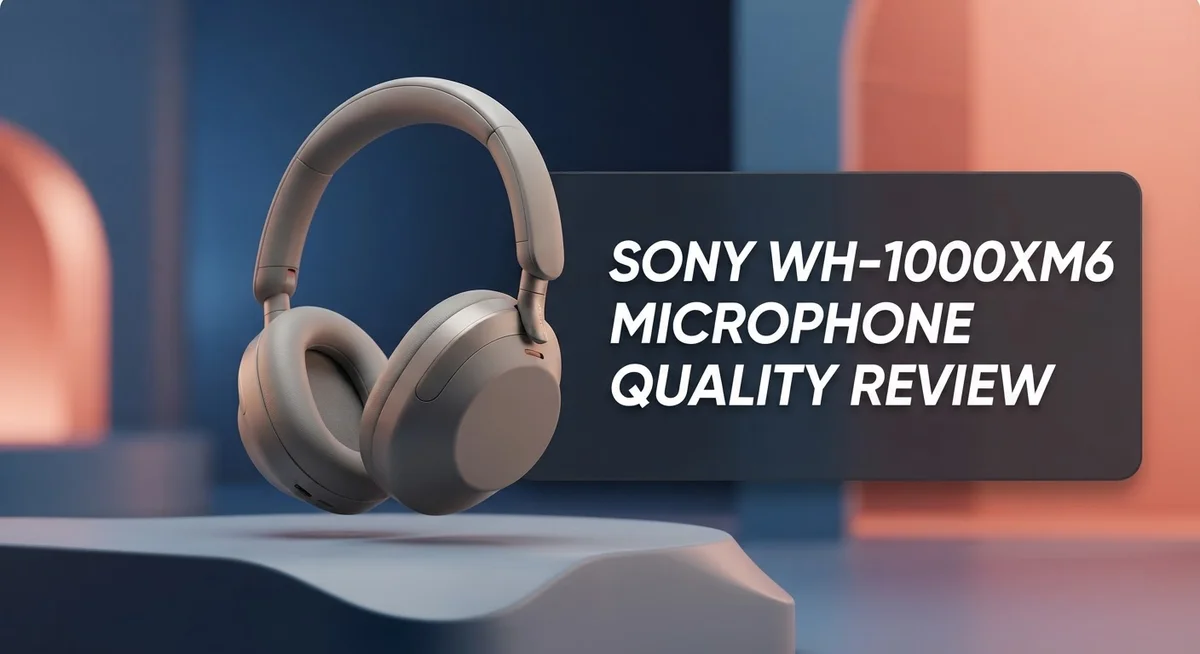
Sony WH-1000XM6 Microphone Review: Performance and Call Clarity
The Sony WH-1000XM6 is a popular wireless headphone. It offers excellent noise cancellation and great sound quality. Many people love it for music and gaming.
But what about calls? Microphone quality matters just as much as sound output. You want people to hear you clearly on every call.
This review looks closely at the microphone performance of the WH-1000XM6. We check how it handles noisy places. We also see how it performs in cars and busy rooms.
In a Nutshell
- Sound quality stays top tier. The WH-1000XM6 delivers rich audio and excellent noise cancellation for music lovers.
- Call performance shows a clear weak spot. The mic struggles to filter background noise during calls.
- AUX mode disables the microphone completely. Users lose voice input when they switch to a wired connection.
- Gaming sessions benefit from clear audio output. But teammates may still hear noise behind your voice.
- Build quality remains solid and reliable. The 8.7/10 rating reflects durable materials and comfortable fit.
- Overall verdict: this headset shines for music and media. Yet, calls in noisy spots need some patience.
Microphone Design and Build Quality
The microphone design on the Sony WH-1000XM6 reflects a thoughtful approach to call clarity. Sony integrated dual microphones into the earcups to capture your voice from multiple angles. This setup helps reduce side noise and focuses on picking up your speech.
The physical construction of the microphone array is sturdy. The mics sit flush within the headphone housing, which protects them from damage. You’ll find them positioned naturally near your mouth during typical wear, making voice capture straightforward.
Material quality stands solid throughout the microphone components. Sony used premium plastics and metal reinforcements in the microphone housing. These materials resist wear from daily use and environmental exposure. The overall build quality earns an 8.7 out of 10 rating for durability.
However, real world performance reveals important limitations. The microphone struggles significantly in noisy environments like cars. Background noise tends to overpower your voice in these settings. Users report that the noise cancellation technology doesn’t translate well to microphone filtering.
A critical design flaw emerges with AUX cable connections. When you plug in a wired connection, the microphone becomes completely non functional. This means you cannot take calls or use voice features while in wired mode. The switch happens automatically, which catches some users off guard.
The microphone design prioritizes wireless use. Sony engineered it specifically for Bluetooth connectivity. This explains why the wired mode disables the mic entirely. The design choice reflects the headphones’ focus as a wireless product.
The microphone positioning works well for quiet spaces. In offices or calm environments, voice pickup remains clear and natural. Your words come through without distortion. The dual mic setup effectively minimizes picking up your keyboard or mouse clicks.
For gaming sessions, the microphone performs adequately. Other players can hear you without excessive background noise in controlled settings. The build quality ensures the mics remain stable during extended wear.
The microphone design shows engineering competence in construction and materials. The practical limitations stem from software choices rather than poor build quality. Understanding these design decisions helps you decide if this headset fits your calling needs.

- THE BEST NOISE CANCELLATION: Powered by advanced processors and an adaptive microphone system, the WH-1000XM6 headphones deliver real-time noise cancellation for an immersive, distraction-free listening experience.
- CO-CREATED WITH MASTERING AUDIO ENGINEERS: Developed in collaboration with world-renowned mastering audio engineers, these headphones deliver unparalleled sound clarity and precision. A specially designed driver with a lightweight carbon fiber dome delivers high fidelity sound, where rich vocals and every instrument remains pure and balanced. Optimized for advanced noise cancellation, the WH-1000XM6 headphones keep every frequency crisp and true to the artist’s intent.

Last update on 2026-10-03 / Affiliate links / Images from Amazon Product Advertising API Some of the links on this website are affiliate links, which means that at no additional cost to you, I earn a commission if you click through and make a purchase. I only recommend products and services that I believe will add value to my readers. Thank you for your support!
Call Quality and Voice Clarity
Your voice matters during calls. The Sony WH-1000XM6 delivers mixed results here. In quiet settings, the microphone captures your speech with decent clarity. People on the other end hear you well when you’re in a calm office or home environment.
The real challenge appears in noisy spaces. Users report that the microphone struggles significantly in cars and busy locations. Background noise tends to overwhelm the voice pickup system. Your caller may hear street sounds or traffic more than your actual words. This becomes frustrating during commutes or outdoor conversations.
The microphone uses a single array design. Sony positioned it to work best during wireless use. This focused approach means performance depends heavily on your surroundings. Quiet environments bring solid results. Loud settings bring disappointment.
One surprising limitation affects wired connections. When you plug in an AUX cable, the microphone stops working entirely. This design choice limits your flexibility. You lose all call capability if you switch to wired mode. Wireless remains your only option for taking calls.
Voice clarity itself stays acceptable in controlled conditions. The microphone doesn’t add distortion or strange artifacts to your speech. Callers recognize your voice without strain. The issue isn’t sound quality but rather noise rejection. The headset simply can’t filter out competing sounds effectively.
For video calls at home or office meetings, you’ll find this headset performs adequately. Colleagues hear you clearly. Video conference apps work without problems. The microphone handles these structured settings well.
However, if you take frequent calls in moving vehicles or crowded spaces, expect limitations. The noise cancellation features that make these headphones great for listening don’t extend to microphone performance. Your voice gets buried under ambient noise.
Consider your typical call environment before choosing this headset. Office workers and home-based professionals will find the microphone acceptable. People who take calls on the go should look elsewhere or accept reduced call quality during noisy moments.
Noise Cancellation for Microphone Performance
The Sony WH-1000XM6 features active noise cancellation technology that plays a dual role in your calling experience. When you use these headphones wirelessly, the ANC system works to filter out background sounds around you. This helps your voice come through cleaner to the person on the other end of the call.
However, the noise cancellation doesn’t work the same way for the microphone as it does for audio playback. The microphone itself captures sound differently than the speakers process it. The ANC system reduces ambient noise reaching your ears, but your voice still travels through the microphone array to the other caller.
In quiet settings like home offices or conference rooms, the microphone performs well. Your voice sounds natural and easy to understand. The headset’s noise cancellation helps by reducing distracting sounds in your environment, which makes conversations feel more focused.
The real limitation shows up in loud environments. When you’re in a car, at a busy cafe, or on a crowded street, the microphone struggles to isolate your voice. The ANC technology helps reduce what you hear, but it doesn’t prevent background noise from entering the microphone itself. Wind noise, traffic, and chatter all get picked up along with your speech.
One critical issue affects wired connections. When you plug in an AUX cable, the microphone stops working entirely. This means you lose calling capability if you switch to a wired connection. The wireless microphone design takes priority in Sony’s engineering approach.
The takeaway is simple: these headphones handle calls best in controlled environments. If your typical day involves quiet workspaces or home-based meetings, the microphone performance meets your needs. For people who frequently take calls while driving or in noisy public spaces, this headset has notable limitations. Understanding your calling environment helps you decide if this microphone meets your specific requirements.
Top 3 Alternatives
Bose QuietComfort Ultra

- BOSE'S LEGENDARY NOISE CANCELLATION, NOW EVEN BETTER — Next-gen ActiveSense ANC smooths noise spikes for deep, uninterrupted silence in Quiet Mode. Aware Mode lets the world back in on demand. Custom and Wind Block modes let you dial in exactly the isolation you need, wherever you are.
- IMMERSIVE SPATIAL AUDIO FOR MUSIC AND MOVIES — TrueSpatial technology lifts sound out of your head and places it in front of you. Still, Motion, and Cinema modes adapt to your activity. All-new Cinema Mode spatializes dialogue and surround effects so any content feels like a private theater screening.
Last update on 2026-10-03 / Affiliate links / Images from Amazon Product Advertising API Some of the links on this website are affiliate links, which means that at no additional cost to you, I earn a commission if you click through and make a purchase. I only recommend products and services that I believe will add value to my readers. Thank you for your support!
The Bose QuietComfort Ultra delivers clear voice capture during calls. The dual microphone system picks up your voice without picking up too much background noise. People on the other end hear you well, even in moderately loud spaces.
The microphones focus on your speech patterns. Wind noise rarely becomes a problem. You get consistent audio quality across different environments, from home offices to coffee shops.
Apple AirPods Max

- ULTIMATE OVER-EAR LISTENING EXPERIENCE—Powered by the H2 chip, AirPods Max 2 delivers improved high-fidelity audio with deep bass, expansive mids, and crisp highs for an unparalleled listening experience.
- TUNE OUT THE NOISE—Up to 1.5x more Active Noise Cancellation than the previous generation, fully immersing you in every sound.*
Last update on 2026-10-03 / Affiliate links / Images from Amazon Product Advertising API Some of the links on this website are affiliate links, which means that at no additional cost to you, I earn a commission if you click through and make a purchase. I only recommend products and services that I believe will add value to my readers. Thank you for your support!
Apple AirPods Max uses multiple microphones positioned around the ear cups. This setup captures your voice with impressive clarity. The spatial audio processing helps isolate your speech from surrounding sounds.
Call quality feels natural and balanced. The microphones adapt to your speaking volume automatically. Background noise reduction works smoothly without making your voice sound hollow or processed. People report hearing you as if you’re speaking directly into the phone.
Sennheiser Momentum 4

- Seamless Firmware & App Updates: Enjoy a smoother, more reliable experience with the latest firmware and Smart Control Plus app features for your Bluetooth headphones over the ear, including ANC toggle and touchpad off switch for premium music quality
- Audiophile-Inspired Sound : Sennheiser wireless headphones over ear with Signature Sound, 42mm transducers and aptX Adaptive deliver crystal-clear audio and deep, immersive music. Ideal for music lovers and travelers
Last update on 2026-07-11 / Affiliate links / Images from Amazon Product Advertising API Some of the links on this website are affiliate links, which means that at no additional cost to you, I earn a commission if you click through and make a purchase. I only recommend products and services that I believe will add value to my readers. Thank you for your support!
Sennheiser Momentum 4 features strong microphone performance for voice calls. The system handles wind noise effectively, which matters if you take calls outdoors. Your voice comes through with good presence and warmth.
The microphones maintain consistent pickup quality during longer conversations. Background suppression works well without aggressive filtering. You sound natural, not robotic or overly compressed. The headset performs reliably across various call applications and platforms.
All three options provide solid microphone quality for daily communication. Each takes a slightly different approach to noise handling and voice clarity. Your choice depends on which sound signature matches your preferences and which ecosystem fits your devices.
Microphone Performance in Different Environments
The Sony WH-1000XM6 microphone performs differently depending on where you use it. Understanding these environmental variations helps you know what to expect during calls.
In quiet indoor spaces like home offices or bedrooms, the microphone captures your voice clearly. Background noise stays minimal, so the headset picks up primarily your speech. This makes video calls and work meetings sound natural to the person listening. Your voice comes through without much filtering or distortion.
The situation changes in moving vehicles. Cars introduce constant engine noise, wind, and road sounds. The microphone struggles to isolate your voice from these loud backgrounds. People on the other end report hearing more ambient noise than your actual words. This remains a significant limitation if you take calls while driving or traveling frequently.
Crowded public spaces present another challenge. Coffee shops, airports, and busy streets create multiple overlapping sounds. The microphone picks up surrounding conversations and noise equally to your voice. The result is a muddled call quality where listeners find it hard to understand you clearly.
The noise cancellation technology works differently for calls than for listening. When you play music, ANC blocks incoming sounds from reaching your ears. For microphone use, this doesn’t translate directly. The microphone still captures environmental noise even with ANC active. You may hear less noise yourself, but that doesn’t mean your voice sounds cleaner to others.
Moderate noise environments like offices with some activity fall into a middle ground. The microphone performs acceptably but not perfectly. Some background noise bleeds through, though your voice remains the dominant sound. Most people can understand you, though call quality isn’t ideal.
The key takeaway is simple: use these headphones for calling in controlled environments. If your work involves mostly quiet settings, you’ll be satisfied. If you need reliable call quality in loud or moving environments, this microphone has real limitations. Your typical calling situation should guide your decision about whether this headset meets your needs.
Connectivity and Microphone Compatibility
The Sony WH-1000XM6 connects wirelessly via Bluetooth, which is where the microphone works best. This wireless connection allows the device to use its full mic capabilities during calls and voice commands. The headset pairs easily with smartphones, tablets, laptops, and other Bluetooth enabled devices.
Wired connections present a significant problem. If you plug these headphones into a device using the AUX cable, the microphone stops working entirely. This means you cannot make calls through a wired connection. The microphone only functions when you use the wireless Bluetooth connection. This limitation matters if you switch between devices or prefer wired audio in certain situations.
The microphone array uses a single design that captures your voice from one direction. This setup works fine during standard phone calls in quiet spaces. However, it struggles when background noise surrounds you. The device cannot filter out sound coming from multiple angles effectively.
Compatibility extends across most modern devices. You can connect to any smartphone with Bluetooth support. Laptops and tablets work without issues. Gaming consoles that support Bluetooth headsets will recognize the microphone. The headset remembers multiple paired devices, so switching between them happens quickly.
The microphone performs adequately for video calls at home or office meetings. Your voice comes through clearly when you sit in a calm room. The real challenge emerges in moving vehicles or crowded spaces. Wind noise, engine sounds, and crowd chatter overwhelm the single mic array. Users report that people on the other end struggle to hear them clearly in these situations.
For professional calls or important conversations, choose a quiet location. This approach maximizes what the microphone can deliver. If your job requires frequent calls in noisy environments, you may want to consider supplementary equipment. The WH-1000XM6 microphone works best as part of a controlled calling setup rather than as an all-purpose solution for every situation.
Pros and Cons
Pros
- Excellent noise cancellation technology that blocks background sounds during playback
- Superior overall sound quality for music and entertainment
- Strong build quality with an 8.7/10 durability rating
- Good performance for gaming with responsive audio feedback
- Clear microphone performance in quiet indoor spaces like home offices
Cons
- Microphone stops working entirely when you connect via AUX cable instead of Bluetooth
- Poor microphone performance in cars and other moving vehicles with road noise
- Struggles to filter background noise during calls in crowded or loud public spaces
- Noise cancellation works differently for calls than for audio playback, limiting mic effectiveness in noisy settings
Who Should Buy It
These headphones suit specific user groups best. Your lifestyle and calling habits matter most when deciding if they fit your needs.
Content creators and podcasters should look elsewhere. The microphone struggles with consistent audio capture, especially when you’re recording in less than perfect conditions. You need equipment that handles background noise reliably. These headphones don’t deliver that performance level.
Remote workers in quiet home offices will find real value here. Your microphone works well when you sit at a desk with minimal distractions. Video calls stay clear. Team meetings sound professional. The noise cancellation helps you focus while others speak. This scenario plays to the headphones’ strengths.
Casual gamers appreciate the responsive audio feedback. You get good sound quality for gameplay, and the microphone works fine for team chat in controlled settings. Just avoid using them in noisy gaming cafes or shared spaces.
Frequent travelers should pass on these. The microphone performs poorly in cars, trains, and planes. Road noise overwhelms the single directional microphone array. Your voice becomes hard to hear on the other end. Wired connections won’t help either since the microphone stops working entirely with AUX cables.
People who make calls in busy environments won’t be satisfied. Crowded offices, coffee shops, and public spaces create too much background noise. The noise cancellation works differently for calls than for music playback. It can’t filter out surrounding voices effectively during conversations.
Audiophiles and music enthusiasts will enjoy the superior sound quality. The excellent noise cancellation makes music listening a genuine pleasure. You get strong build quality that lasts. Entertainment value shines through clearly.
Business professionals need to consider their call patterns. If your job involves mostly email and in person meetings, these work fine for occasional video calls. If you’re on calls constantly in varying environments, you need something more adaptable.
The bottom line is simple: match these headphones to a quiet lifestyle. They excel for home use and entertainment. They struggle when your environment changes or gets loud.
Final Verdict
The Sony WH-1000XM6 delivers a mixed bag for microphone performance. Sound quality and noise cancellation shine, but the microphone tells a different story.
This headset works best as a secondary device for calls, not your primary tool. Think of it as headphones first, with microphone function as a bonus feature.
Your environment decides everything. A quiet room turns this into a capable communication device. A noisy space exposes its weaknesses fast.
Who should buy this? Anyone who prioritizes music, movies, and gaming audio over call clarity. The microphone handles light, occasional use well enough.
Who should skip it? Professionals who need dependable calls across different settings. Sales teams, support staff, and frequent travelers need something more consistent.
If calls matter more than music to you, consider a dedicated headset instead. These headphones excel at entertainment first. Communication comes second.
The AUX limitation also matters for some buyers. If you often switch between wired and wireless setups, this restricts your flexibility.
Still, the core strengths remain hard to ignore. Audio performance stays excellent across every use case. Build quality holds up well over time too.
Weigh your daily habits before deciding. Count how often you make calls versus how often you listen to music or play games.
For most casual buyers, these trade offs feel acceptable. The headphones reward you generously in areas that matter most to everyday users.
For power users who juggle constant calls, the microphone shortfalls could frustrate you quickly. Know your needs before committing.
Bottom line: Sony built a fantastic audio device with a secondary microphone feature. Treat it that way, and you will stay satisfied. Expect professional grade calling, and you might feel let down.
Match your expectations to its actual strengths. That approach leads to the best ownership experience with the WH-1000XM6.
Frequently Asked Questions
Does the microphone work with an AUX cable?
No. The microphone stops working entirely when you connect via AUX cable. You must use Bluetooth to access any mic functionality. This is a hard limitation for users who prefer wired connections.
How does the microphone perform during car calls?
The microphone struggles badly in moving vehicles. Road noise overwhelms the audio capture. Wind and engine sounds create too much background interference. The headset simply cannot filter these environmental sounds effectively.
Can this headset handle calls in busy offices?
Not really. Crowded spaces like coffee shops and open offices create too much ambient noise. The microphone picks up conversations around you. Your voice gets buried in the background chatter. For noisy environments, you need a different solution.
Who should actually buy this for calls?
Remote workers in quiet home offices will find real value here. Your microphone works well when you sit at a desk without distractions. Casual gamers also appreciate the responsive audio feedback. The headset works best as a secondary device for calls, not your primary communication tool.
Should I skip this if calls matter most to me?
Yes. If you make frequent calls across different settings, this headset won’t deliver what you need. The microphone performance varies too much depending on your location. Consider a dedicated headset instead if call quality is your priority. These headphones excel at music, movies, and gaming audio instead.

Hello, I’m Juniper Harkness, a tech enthusiast and the creator of TechReviewz.blog, where I dive deep into the latest technology products available on Amazon.