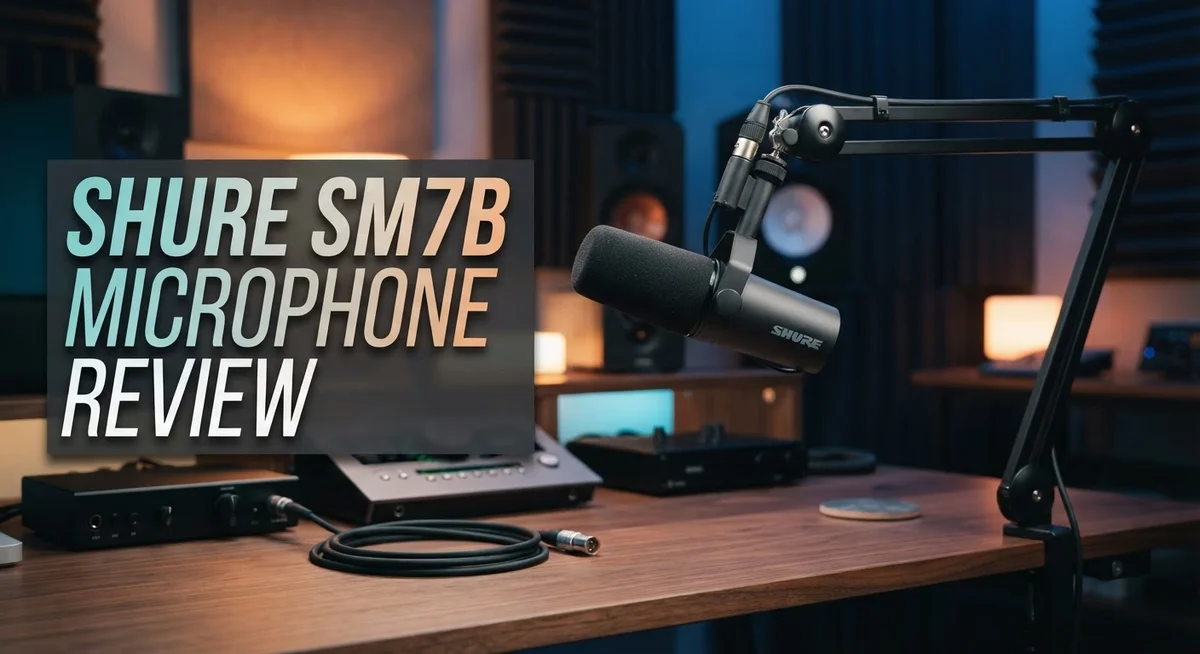
Shure SM7B Microphone Review: Worth the Price Tag?
The Shure SM7B stands tall as a legend in the microphone world. Podcasters, musicians, and broadcasters trust this mic for one simple reason. It delivers smooth, natural sound every single time.
You probably heard this mic on your favorite podcast. Maybe you spotted it on a popular YouTube channel. This microphone shows up everywhere in professional audio setups.
But does it live up to the hype? This review digs deep into what makes the SM7B special. We will explore its sound quality, build design, and real world performance.
In a Nutshell
- Natural vocal tone: The SM7B produces smooth, warm vocals. It makes any voice sound clear and professional.
- Built for broadcasting: This mic shines in podcasting and radio setups. Many top shows trust it for daily use.
- Flexible across sources: You can use it for vocals, acoustic guitar, or other instruments. It adapts well to different sound needs.
- Weak output signal: The SM7B needs a strong preamp to perform well. Without enough gain, the sound stays thin and quiet.
- Sensitive to noise: Poor setup lets background noise creep in. A cheap interface can make this problem worse.
- Learning curve included: Getting the best tone takes practice. Mic placement and distance change the sound a lot.
Audio Quality and Sound Characteristics
The SM7B delivers sound that feels warm and natural across the frequency spectrum. This microphone captures vocals with a smooth character that many engineers prefer over brighter alternatives. The presence peak sits in the right spot to make voices cut through without sounding harsh or fatiguing.
When you record acoustic instruments, the SM7B handles them with care. Guitars sound balanced and detailed. The mic picks up the nuance in fingerpicking and strumming patterns. This versatility makes it a go to choice for studios handling multiple source types.
The frequency response curve works in your favor during recording sessions. Mids stay prominent while highs remain smooth. Bass frequencies stay controlled without muddiness. This character means less EQ work in post production for many users.
However, sound quality depends heavily on your setup. The SM7B has a weak output signal by design. You need a preamp with real gain to unlock its potential. A cheap interface will amplify noise issues and make the mic sound thin. Investing in quality gear upstream becomes essential.
Background noise becomes a real concern without proper technique. The microphone picks up room reflections and ambient sound more than some alternatives. Your recording space matters. Acoustic treatment helps significantly. Mic placement requires attention and experimentation.
The dynamic design means the SM7B rejects side sounds better than condenser mics. This helps in untreated rooms. The cardioid pattern focuses on what’s directly in front of the capsule. This feature shines during live podcasting or broadcast work.
Proximity effect adds warmth when you work close to the capsule. Some users love this for intimate vocal recordings. Others find it requires careful distance management. Getting the right distance from your mouth takes practice.
Sound isolation improves with proper technique and equipment. A pop filter reduces plosives. A shock mount minimizes vibration transfer. These additions help the SM7B shine. The microphone rewards users who take time to learn its personality. Your effort in setup directly impacts the final audio quality you achieve.

- NATURAL VOCALS: Engineered with a dynamic cartridge and wide-range frequency response, the Shure SM7B captures warm, balanced vocals with exceptional clarity, making it ideal for singing, podcasting, voiceover, and professional studio recording
- FOCUSED AUDIO: A precise cardioid pickup pattern works with air suspension shock isolation to minimize background noise, handling vibrations, and room interference, keeping your voice front and center in any recording or streaming environment
Last update on 2026-09-18 / Affiliate links / Images from Amazon Product Advertising API Some of the links on this website are affiliate links, which means that at no additional cost to you, I earn a commission if you click through and make a purchase. I only recommend products and services that I believe will add value to my readers. Thank you for your support!
Build Quality and Design
The SM7B features a solid metal construction that feels professional in your hands. The microphone body uses a die cast zinc alloy that resists dents and wear. This durable design holds up well in studios and on the road.
The grille design is one of the standout features. Shure built a double mesh grille that protects the capsule while keeping sound quality intact. The grille also reduces plosives naturally, so you need less pop filter work.
Weight matters for a dynamic microphone. The SM7B tips the scales at about 0.6 pounds, which feels substantial without being heavy. This weight helps with stability when mounted on a stand. The balanced feel prevents the mic from tilting or shifting during recording sessions.
The connector setup includes a standard XLR output. This industry standard connection works with virtually every audio interface and mixer on the market. You also get a swivel mount included in the box, which saves you money on accessories.
The design philosophy behind the SM7B prioritizes function over flashy looks. You won’t find RGB lights or trendy aesthetics here. Instead, Shure focused on a clean, matte black finish that blends into any studio environment. The minimalist approach means fewer moving parts to break.
One practical detail stands out: the presence peak boost switch. This switch lets you adjust the mic’s response without external gear. Flipping it on adds presence to vocals or instruments. Flipping it off gives you a more neutral tone.
The capsule sits inside a shock mount system. This internal mounting reduces vibration noise when you accidentally bump the stand. The design shows Shure’s attention to real world studio problems.
Build quality here reflects professional standards. Every component feels tight and well assembled. The threaded connections sit flush without wobbling. This attention to detail means the SM7B will serve you for years without degradation.
The overall design makes sense for broadcasters and podcasters. The form factor works well in tight spaces. The rugged construction survives the demands of daily use. This microphone simply feels like it belongs in a serious studio.
Setup Requirements and Connectivity
The SM7B demands more than just plugging in a cable. You need the right setup to unlock its full potential.
XLR connectivity is your standard path. The mic uses a traditional XLR output, which means you’ll connect it to an audio interface or mixer. This cable carries your voice signal from the microphone to your recording device. Quality matters here because cheap cables pick up interference and hum.
A strong preamp is non-negotiable. The SM7B produces a weak output signal on its own. Your interface or preamp must provide enough gain to boost that signal without adding noise. This is where many people struggle. A budget interface won’t cut it. You need a preamp with clean amplification and low noise floor.
The USB option exists, but XLR remains the professional choice. USB connections limit your flexibility and don’t give you the same control over gain staging.
Mic cable quality makes a real difference. Use shielded XLR cables rated for professional audio. Poor cables introduce hum, buzz, and interference that ruin your recordings. Invest in cables from reputable brands.
Proper gain staging prevents problems. Set your preamp gain correctly from the start. Too low and you’ll hear noise when you boost the signal in post production. Too high and you’ll clip and distort. Find the sweet spot where your peaks hit around 6 dB below maximum without clipping.
Microphone placement affects everything. Position the SM7B at mouth level, about 2 to 4 inches away. Closer placement adds warmth through proximity effect. Farther placement reduces plosives and picks up more room sound. Experiment to find what works for your voice and space.
A shock mount isolates vibration. The SM7B works best with a shock mount that decouples it from your desk or stand. This prevents vibrations from traveling through the microphone and into your recording.
Setup takes time and attention, but the results justify the effort. The SM7B rewards proper technique with professional-grade audio that sounds clear and controlled.
Top 3 Alternatives
Audio-Technica AT2020

- The price/performance standard in side-address studio condenser microphone technology
- Ideal for project/home-studio applications
Last update on 2026-10-03 / Affiliate links / Images from Amazon Product Advertising API Some of the links on this website are affiliate links, which means that at no additional cost to you, I earn a commission if you click through and make a purchase. I only recommend products and services that I believe will add value to my readers. Thank you for your support!
The Audio-Technica AT2020 offers excellent value for podcasters and content creators. This condenser microphone captures clear vocals with a presence peak that makes speech pop. The cardioid pattern rejects side and rear noise effectively.
You’ll appreciate the lightweight design and easy setup. The AT2020 works well with most audio interfaces without needing phantom power complications. Many users report it sounds professional right out of the box for streaming and recording.
Neumann U87

- Variable large diaphragm microphone
- Classic sound, instantly recognizable yet versatile
Last update on 2026-09-18 / Affiliate links / Images from Amazon Product Advertising API Some of the links on this website are affiliate links, which means that at no additional cost to you, I earn a commission if you click through and make a purchase. I only recommend products and services that I believe will add value to my readers. Thank you for your support!
The Neumann U87 represents premium studio quality. This condenser mic features a switchable cardioid and omnidirectional pattern, giving you flexibility for different recording situations. The presence peak enhances vocal clarity while maintaining natural sound.
Durability stands out as a key strength. The U87 handles high sound pressure levels without distortion. Professional studios worldwide choose this microphone for vocals, instruments, and voice acting. The construction quality justifies its reputation in broadcast and music production.
Electro-Voice RE20

- The classic sound of FM radio voices
- Smooth, natural and controlled sonic character
Last update on 2026-10-03 / Affiliate links / Images from Amazon Product Advertising API Some of the links on this website are affiliate links, which means that at no additional cost to you, I earn a commission if you click through and make a purchase. I only recommend products and services that I believe will add value to my readers. Thank you for your support!
The Electro-Voice RE20 is a dynamic microphone built for broadcast environments. Unlike condenser options, it handles proximity effect well and rejects feedback naturally. The cardioid pattern keeps focus on your voice.
This microphone excels in untreated rooms because it doesn’t pick up ambient noise as easily as condensers do. Radio stations and podcasters favor the RE20 for its rugged construction and consistent performance. The presence peak adds warmth to male and female voices alike. You get reliable sound without needing expensive acoustic treatment.
Performance Across Different Applications
The SM7B shines in broadcasting environments where clarity matters most. Radio stations rely on this mic because it captures voice with smooth, natural tonality that listeners appreciate. Podcasters benefit from the same advantage. Your voice sounds professional without artificial processing.
Vocal recording sessions reveal another strength of the SM7B. The microphone handles both spoken word and singing with equal skill. The proximity effect adds warmth when you position it close to your mouth. This feature works in your favor for intimate vocal performances.
Acoustic guitar recording demonstrates the SM7B’s versatility. The dynamic design captures string vibrations without harshness. Finger noise becomes less problematic compared to condenser alternatives. You get a balanced tone that sits well in a mix.
Drum recording is where the SM7B proves its worth. Drummers often place this mic on snare drums or kick drums. The rugged construction withstands the physical demands of drum work. The sound output remains consistent through intense playing sessions.
Live streaming applications benefit from the SM7B’s rejection of side sounds. The cardioid pattern focuses on what’s directly in front of the capsule. Background noise stays reduced when you use proper technique. This matters for content creators working in untreated spaces.
However, performance depends entirely on your supporting equipment. A weak preamp will expose the SM7B’s low output signal as a limitation. Cheap audio interfaces amplify background noise rather than eliminate it. You need quality gear to unlock what this microphone can do.
Microphone placement becomes critical across all applications. The SM7B demands precision positioning to sound its best. Moving it even an inch changes the tonal character. This learning curve separates casual users from professionals.
The SM7B adapts well to different recording scenarios once you master the setup. Broadcasters, podcasters, musicians, and streamers all use this mic successfully. Success requires understanding that the microphone itself is only part of the equation. Your interface, cables, preamp, and technique matter just as much as the capsule itself.
Learning Curve and Mic Placement
The SM7B demands respect when it comes to setup and positioning. This microphone has a steep learning curve, but mastering it unlocks professional results.
Understanding the Gain Challenge
The SM7B produces a weak output signal by design. You cannot simply plug it into any interface and expect great sound. Your preamp must provide substantial gain to bring the signal to usable levels. This requirement separates casual users from serious professionals. Many beginners struggle here because they underestimate how much amplification the mic needs.
Mic Placement Matters Enormously
Position the SM7B at mouth level, roughly 2 to 4 inches away from your source. This distance is not arbitrary. Too close, and you risk plosives and proximity effects. Too far, and background noise becomes a problem. The microphone’s cardioid pattern helps reject side sounds, but placement determines whether that rejection actually works in your favor.
The Background Noise Factor
Without proper positioning, the SM7B picks up more ambient sound than you might expect. This happens because the weak output signal forces you to push your preamp gain higher. Higher gain amplifies everything, including room noise. A cheap interface compounds this problem by adding its own noise floor. Quality equipment becomes non negotiable here.
Learning Through Practice
New users often make mistakes with cable selection and gain staging. Invest in shielded XLR cables rated for professional audio. Set your preamp gain correctly from the start rather than adjusting it constantly during recording. These fundamentals prevent frustration later.
The Payoff
Once you understand the SM7B’s requirements, the learning curve flattens significantly. You develop muscle memory for proper placement. You know exactly how much gain your specific preamp needs. The microphone then becomes incredibly reliable across vocals, acoustic instruments, and broadcasting work. The initial investment in learning pays dividends through consistent, professional sound quality that justifies the effort you put in upfront.
Pros and Cons
Pros
- Delivers smooth, natural-sounding vocals that broadcast professionals rely on
- Works across multiple applications including vocals, acoustic guitar, and drums
- Industry standard choice trusted by studios and podcasters worldwide
- Excellent side-rejection makes it ideal for live streaming and noisy environments
- Proven versatility once your setup is dialed in correctly
Cons
- Requires a quality preamp and interface; weak output signal demands significant gain
- Picks up background noise easily without proper positioning and equipment
- Steep learning curve for mic placement, cable selection, and gain staging
- Cheap interfaces amplify noise problems instead of solving them
- Not forgiving of mistakes in setup or positioning
Who Should Buy It
The SM7B works best for people who already have professional audio equipment. You need a quality preamp or audio interface to make this mic shine. If you’re just starting out with a cheap USB interface, this mic will frustrate you.
Podcasters and broadcasters love the SM7B. Your voice sounds warm and natural through this mic. The side rejection helps you avoid picking up room noise during recording sessions. Many established shows use the SM7B as their standard choice.
Music producers benefit from the SM7B too. You can use it for vocals, acoustic instruments, and even drums. The versatility makes it useful across different projects. However, you need to understand mic placement and gain staging to get great results.
Live streamers find value here as well. The SM7B rejects sound coming from the sides and back. This means your stream picks up less background noise compared to other mics. Your viewers hear a cleaner audio feed.
This mic suits people willing to learn. The SM7B has a steep learning curve. You must understand how to position it correctly. Cable selection matters. Gain staging takes practice. If you want a mic that works instantly without effort, skip this one.
The SM7B is not ideal for beginners on a tight budget. You need supporting equipment that costs real money. You also need time to master the setup. Cheap interfaces will amplify noise problems instead of solving them.
You should consider the SM7B if you already have professional gear. You should buy it if you’re serious about audio quality. You should choose it if you can dedicate time to learning proper technique.
Skip the SM7B if you want plug and play simplicity. Skip it if your current interface is low quality. Skip it if you don’t want to troubleshoot mic placement issues. Consider alternatives like the Samson Q9U or Shure SM58 if you need something easier to use right away.
Final Verdict
The Shure SM7B earns its reputation as a serious tool for serious audio work. This mic rewards patience and the right setup with results that rival mics costing much more.
Build quality stands out here too. The SM7B feels solid and durable, built to last through years of daily studio or podcast sessions. Many professionals still use units bought over a decade ago.
If you want a microphone that grows with your skills, the SM7B fits perfectly. It challenges you at first, but it never stops delivering value once you understand its quirks.
This mic also holds its value well over time. Studios and creators trust the SM7B name, which makes it a smart long term choice for anyone building a permanent setup.
Think of the SM7B as an investment in your sound, not just a purchase. It pushes you to improve your audio chain, from cables to preamps to room treatment.
That push often makes your entire setup better, not just your microphone. Many users report upgrading other gear simply because the SM7B demanded it.
The final call comes down to your goals and your current gear. If you already have strong audio equipment and want broadcast quality sound, this mic delivers every time.
If you are just starting out or want something simple, look elsewhere first. The SM7B does not try to be everything to everyone, and that focus is its strength.
For podcasters, streamers, and musicians ready to commit, the SM7B remains a top choice. It has earned its spot in countless studios for good reason.
In short, the Shure SM7B is not a casual purchase. It is a professional tool that rewards the right user with sound quality that stands the test of time.
Choose it if you are ready to learn. Skip it if you want instant results without effort.
Frequently Asked Questions
Does the SM7B work with USB connections?
The SM7B includes both XLR and USB outputs. However, the USB connection still requires an external preamp or audio interface to function properly. You cannot simply plug it into your computer and expect professional results. The USB option adds flexibility, but the microphone’s weak output signal means you need quality amplification regardless of which connection type you choose.
Can beginners use the SM7B successfully?
The SM7B has a steep learning curve. Beginners often struggle with mic placement, gain staging, and cable selection. This microphone demands knowledge and experience. If you are just starting out, consider learning on something simpler first. The SM7B rewards users who understand audio fundamentals and have professional equipment already in place.
What makes the SM7B different from cheaper alternatives?
The SM7B delivers smooth, natural-sounding vocals that other mics in its class cannot match. It rejects side noise effectively, making it ideal for live streaming and broadcasting. Competitors like the Samson Q9U cost less but lack this same sonic quality and professional reputation. The SM7B’s industry-standard status means studios and podcasters worldwide trust it for critical work.
Do I need special equipment to use the SM7B?
Yes. The SM7B requires a quality preamp and audio interface to shine. Cheap interfaces amplify background noise and expose the microphone’s limitations. You also need a proper XLR cable and mic stand. Think of the SM7B as an investment that demands the right supporting gear. Without quality equipment, you will struggle with noise and weak signal levels.
Is the SM7B worth the commitment?
For podcasters, streamers, and musicians ready to invest time and resources, the answer is yes. The microphone holds its value well and grows with your skills. If you want plug and play simplicity, look elsewhere first.

Hello, I’m Juniper Harkness, a tech enthusiast and the creator of TechReviewz.blog, where I dive deep into the latest technology products available on Amazon.